Dr. Stone: science, amateur radio and family bond
Dr. Stone As a bridge between generations: science, amateur radio… and shared time
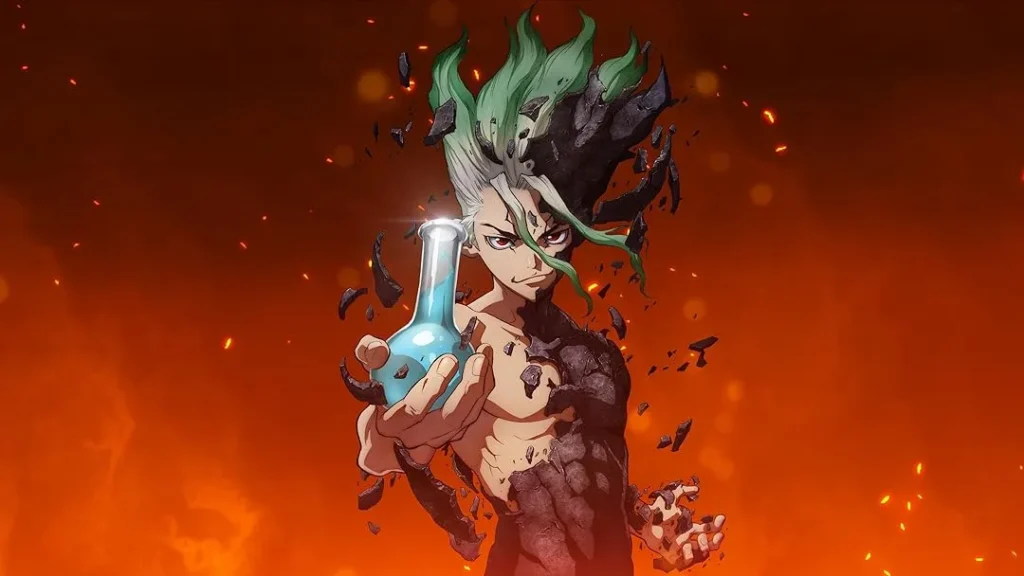
Imagine this: sitting on the sofa with your son or grandson, watching an episode of Dr. Stone, and from that viewing a conversation, a project, a spark of curiosity ends in building something together — perhaps a small homemade radio transmitter. That is the magic this series has: it is not just entertainment, but a toolbox to connect with the little ones at home around science, creativity… and amateur radio.
What is a manga? And what about an anime? And why are adults hooked?
If you are over 50, it is possible that when hearing ‘anime’ you think of Japanese cartoons for children. But not: this goes much further. Let’s go part by part.
Manga: the Japanese comic
- The manga is the Japanese equivalent of our graphic novels or comics, but with a crucial difference: it takes itself very seriously.
- There are ones for all audiences: action, science, love, history, philosophy… even cooking or gardening.
- They are read in black and white, from right to left, and their graphic style has that characteristic touch of large eyes, exaggerated expressions, and very visual narrative.
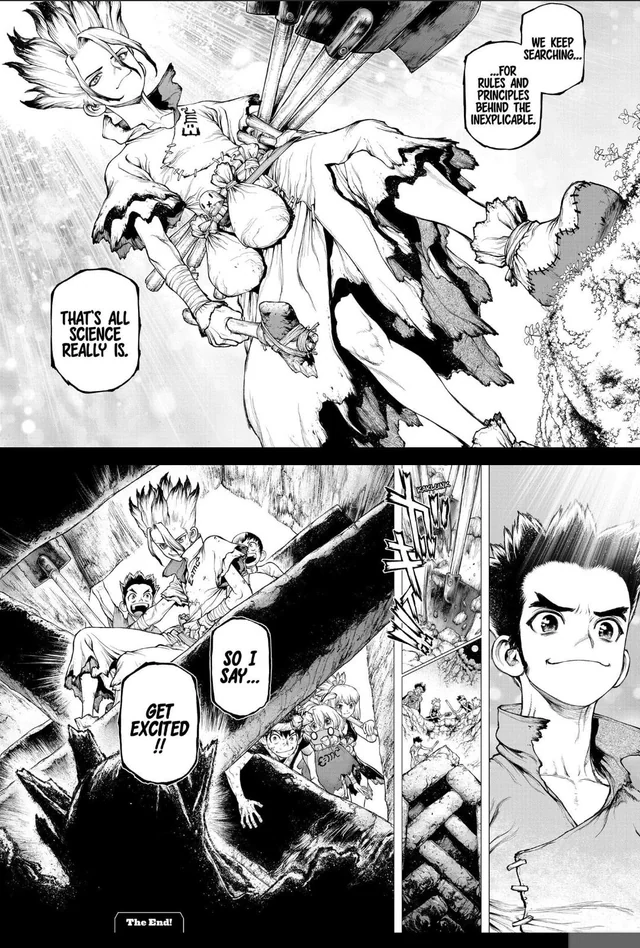
Anime: the animated manga… and more
- The anime is the animated version of the manga, although not always. Some animes are original, others adaptations.
- It is broadcast on television, on streaming platforms or in cinemas, and it usually has a very polished aesthetic, with powerful soundtracks and long plots, like American series.
And why do they succeed among adults?
- Complex themes: Many animes are not for children. They talk about ethics, technology, war, science, politics… with a depth that many Netflix series would already want.
- Nostalgia and generational connection: Those who watched Dragon Ball or Mazinger Z in the 90s now have 30, 40, 50 years. Going back to anime is reconnecting with that emotion… and sharing it with the little ones at home.
- Narrative freedom: Japan does not have the same cultural taboos as the West. That gives rise to unique stories, without absurd censorship, that surprise and hook.
- Aesthetic and different culture: Anime introduces other ways of thinking, seeing the world, relating. It is a window to another culture that stimulates the mind.
Dr. Stone: science, adventure and communication from scratch
Imagine that the whole world goes silent. That one day, without notice, a light petrifies all humanity. Thousands of years later, an adolescent with a scientist’s brain wakes up and proposes a madness: reconstruct civilization with science. Without electricity, without mobiles, without anything. Only stones, nature and knowledge.
That kid is called Senku Ishigami, and what starts as a survival adventure turns into one of the most exciting scientific odysseys we have seen on television. Dr. Stone is an anime, yes. But it is also a lesson in science, history, engineering and, above all, collaboration.
Each episode shows a technological advance: making fire, creating soap, purifying metals, developing vaccines… until reaching what interests us today: radio.
Some references to radio in Dr. Stone
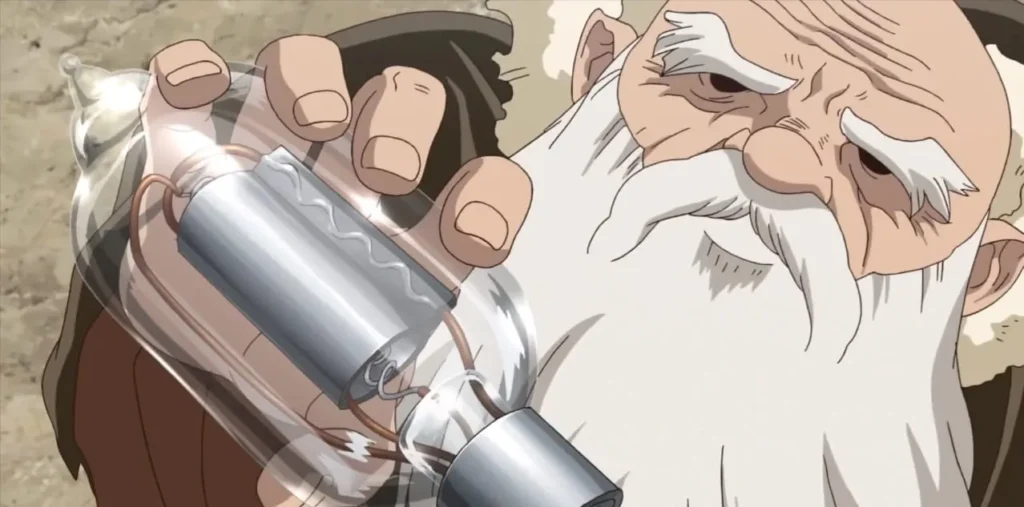
1. The crystal intercom
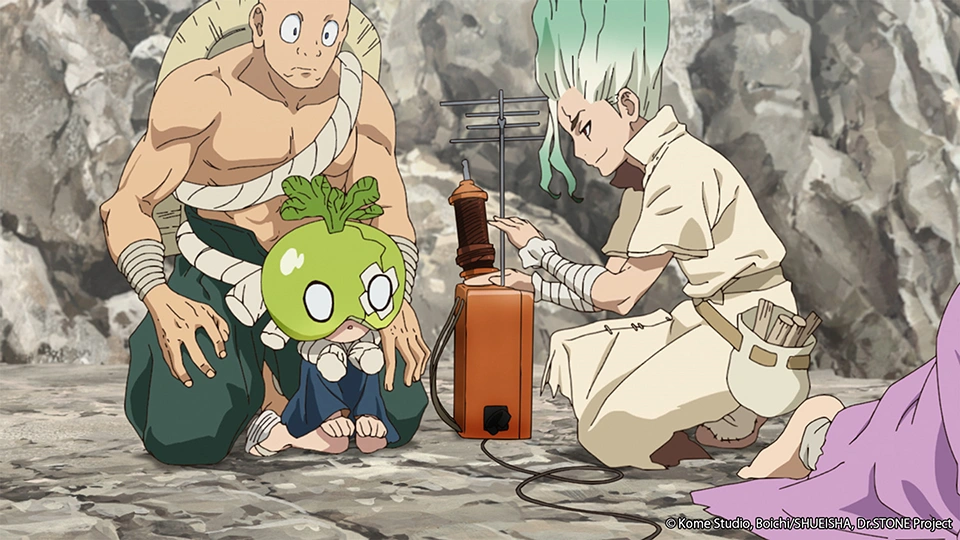
Senku builds a device that many call ‘phone’, but which is actually a two-way radio. It uses Rochelle crystal to convert sound into electricity, and simple materials like coils, magnets and vacuum tubes to transmit voice. It is a handmade technological jewel.
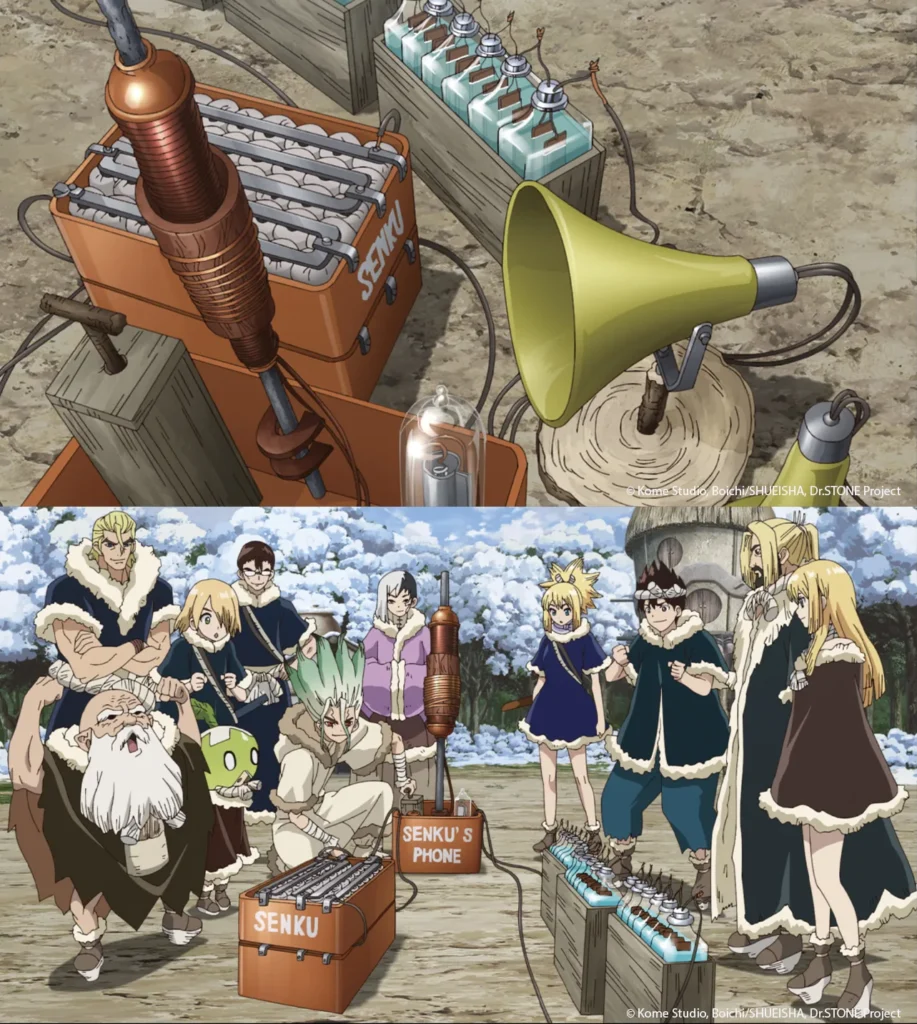
2. The radio tower
Build a long-range transmission tower, powered by hydraulic energy. It is not decoration: it serves to emit real waves and search for other human communities. The moment the tower starts emitting is one of the most powerful moments in the series.
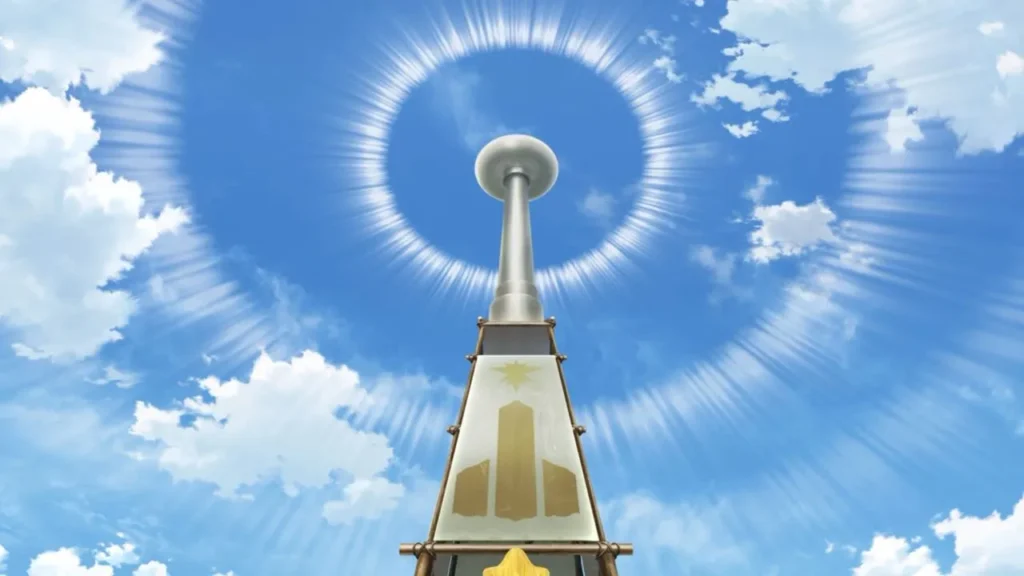
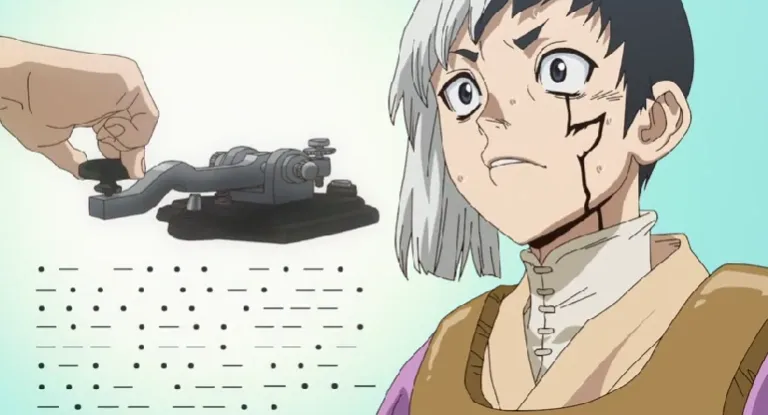
3. The message in Morse code
Suddenly, the tower receives a repetitive signal: “WHY, WHY, WHY…” in Morse code. A mystery. Who is sending it? Where does it come from? That message changes the course of the series and turns radio into the thread connecting the whole plot.
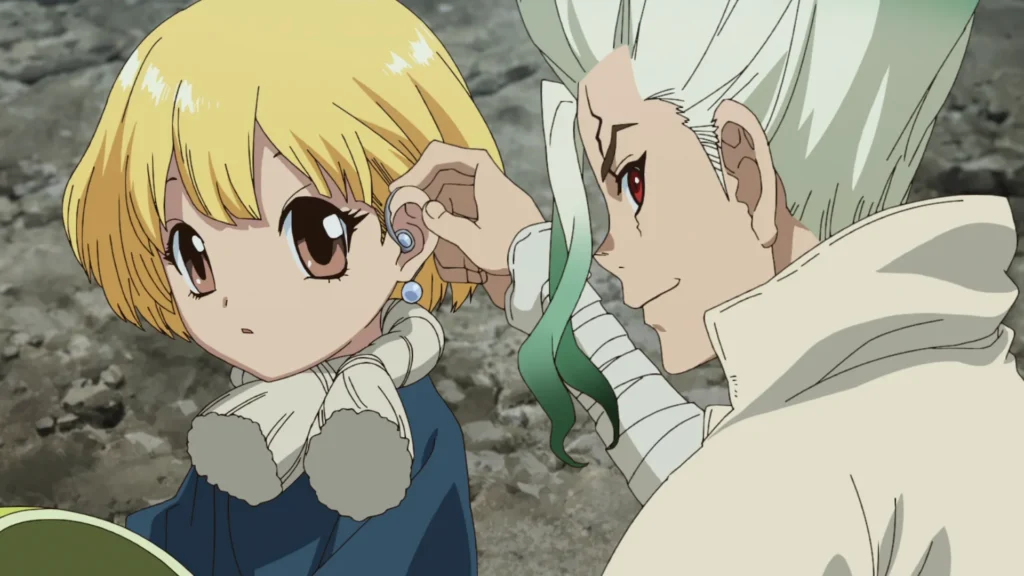
4. The pendant-intercom
A character wears a pendant which is actually a hidden radio receiver. This allows communication strategies in critical situations, such as espionage or real-time coordination. Science applied to narrative tension.
5. Artisan radar
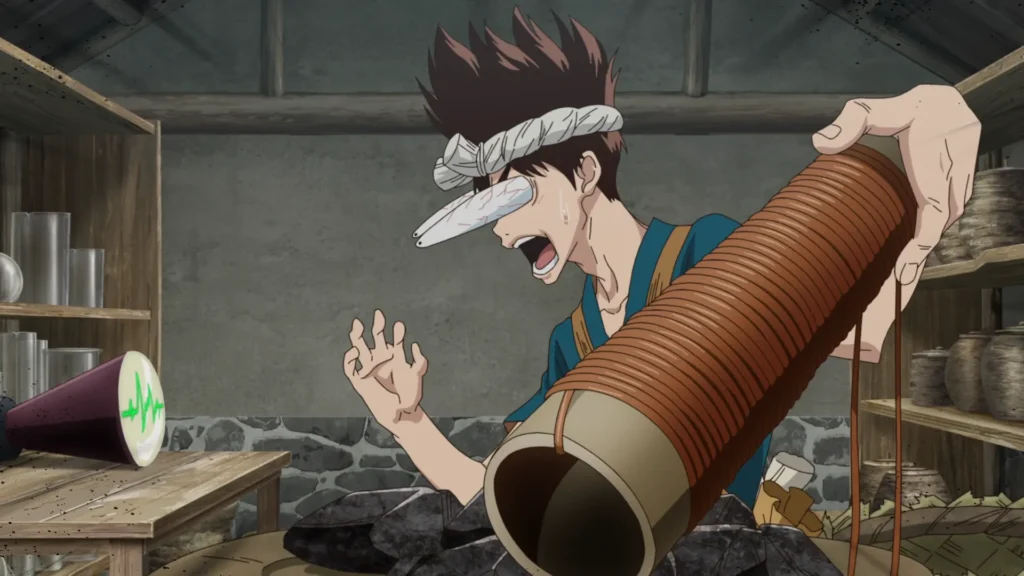
Senku builds a radar system that emits waves and measures its echo to detect objects. It uses real principles of echo and response time. Another masterclass wrapped in action.
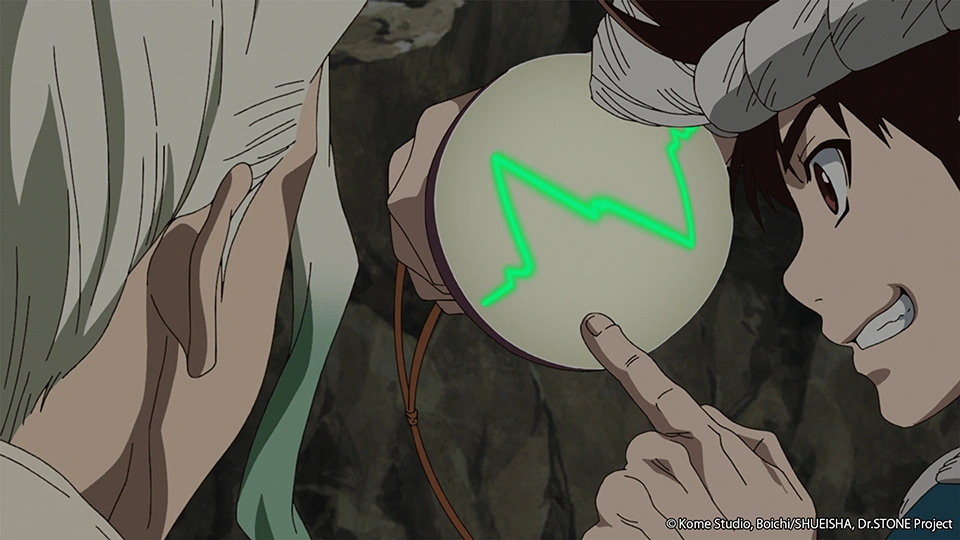
6. Sonar for marine exploration
When traveling by boat, they adapt the radar into a sonar underwater system. They use vibrations and underwater echo to navigate safely. Pure science, with a real purpose.
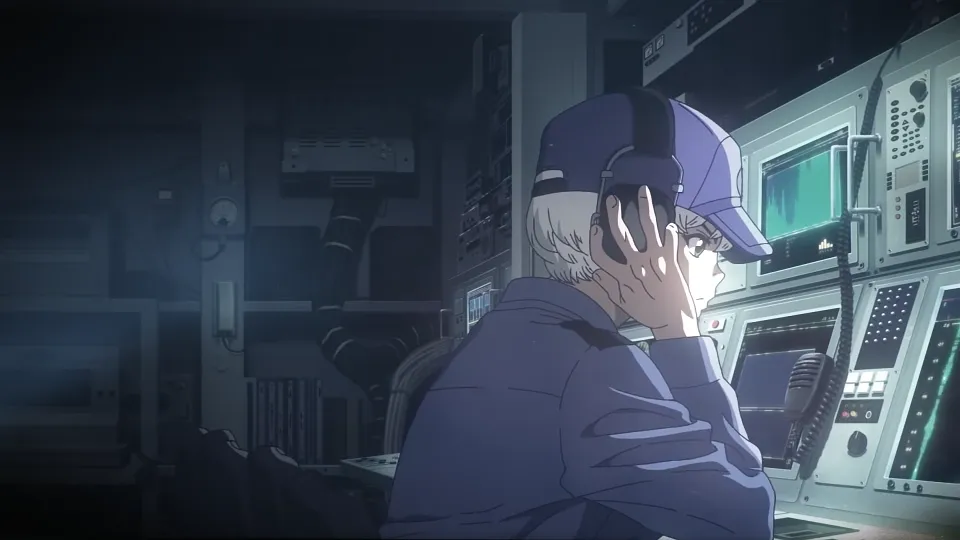
7. Rudimentary GPS
With the radio towers and triangulation, they develop a kind of positioning system that allows them to orient themselves and plot routes. Without satellites, only with classical science.
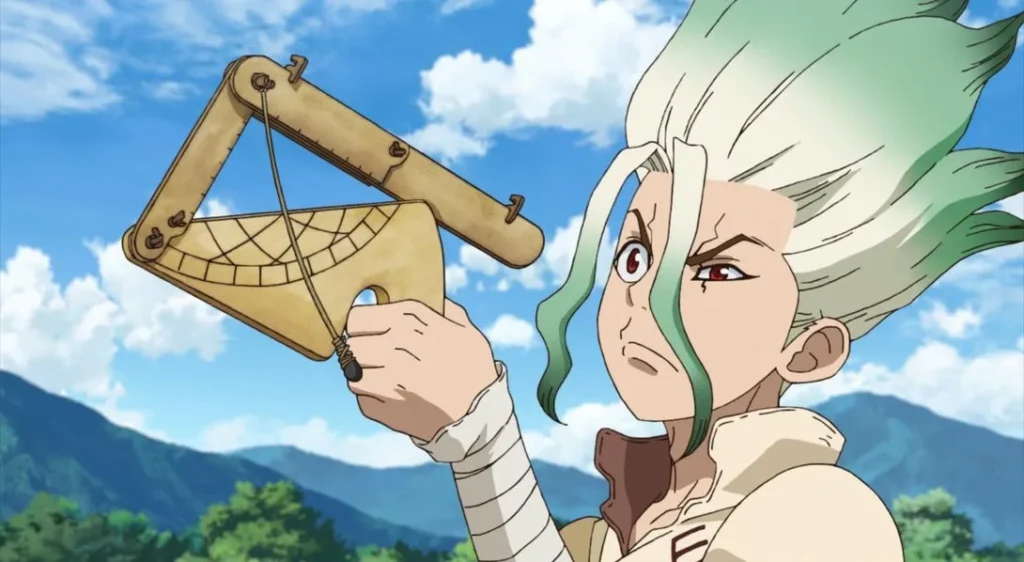
8. Signals from the Moon
Finally, they discover that the mysterious signal in Morse comes from the Moon. Yes, they have been receiving an alien message for centuries. Science fiction with a realistic basis.
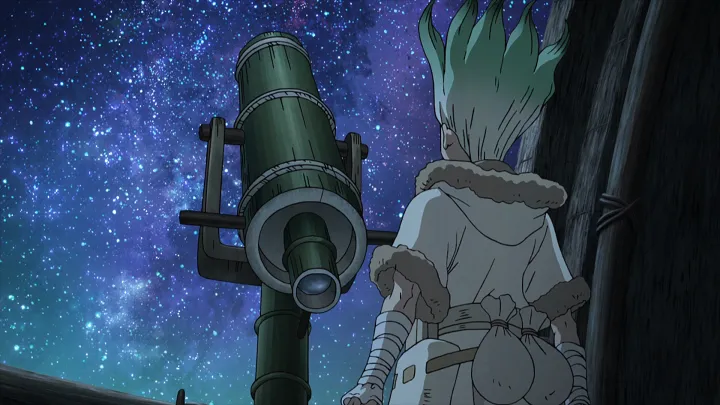
Watch Dr. Stone with the little ones is more than leisure: it is living pedagogy
Watching a series like Dr. Stone with a child is not ‘screen time loss’, but an educational and emotional opportunity. This is supported by pedagogical research:
- Active co-viewing: watching content together and commenting on it improves understanding, memory and curiosity. (Child Mind Institute)
- Parental support: getting involved in learning improves academic performance and strengthens the emotional bond. (PMC)
- Learning through play: series like this allow for playful, experiential and lasting learning. (Wikipedia – Learning through play)
- Trust and values: sharing activities like this generates emotional security and transmits values such as curiosity, cooperation and resilience. (AACAP)
You don’t need to know science. Just be present. They will do the rest.
Broadcasting on the same frequency
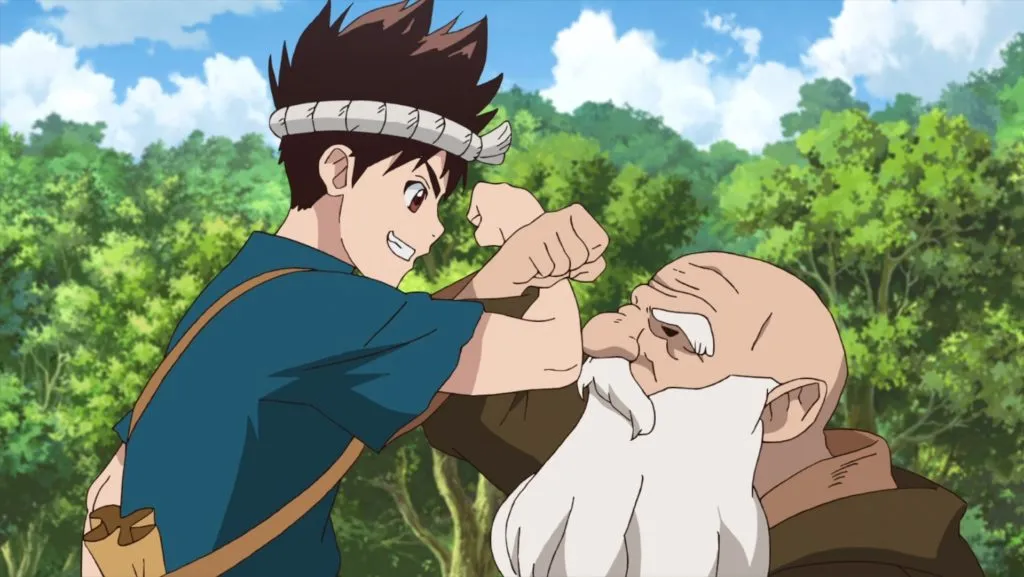
Dr. Stone is not just a Japanese series with weird drawings. It is an invitation to reconnect with science, with curiosity, and with those close to us. If you dare to watch it, perhaps you will not only discover how a radar works, but also how to reconnect with your son. Or with the child that you were.
And if after watching it you feel like setting up an antenna together…
… then mission accomplished.
Other articles that perhaps interest you:
From Analog Clicks to Digital Bits. The Unbreakable Evolution of Amateur Radio