Balcony Antennas
Balcony Antennas: Pride vs. Mockery

For many radio enthusiasts, ‘balcony antennas’ are a kind of hidden shame… but also a symbol of resilience. Throughout this article, I share why, despite their limitations, they are a necessary evil. And I do so from personal experience, without pretense or empty promises.
Are balcony antennas prohibited in Spain?
In Spain, balcony antennas are not prohibited by the Telecommunications Law, but by the Community of Owners’ Law. That is, the problem lies not with the government, but with neighbors. Community associations often raise objections with arguments like ‘it spoils the aesthetics’ or ‘it may cause interference.’
The debate over whether they can be installed or not is eternal. Whether it’s on a terrace, whether it’s a quick and easy job… But here we won’t go into legal debates, as I already do in this article. We will focus on why this technical option is so relevant today.
Urban life isn’t designed for radio amateurs
In 2025, most of the population lives in cities. The result? Limited space, sky-high rents, and zero chances of installing an antenna on your roof. Many radio enthusiasts live rent-free or share a flat. Having access to a roof is a utopia, and convincing the community is even harder.
Moreover, even if you have access to a roof, between the financial investment and the paperwork required to register the installation, many give up. That’s why the balcony antenna becomes the only way not to abandon the hobby.
Debunking myths: Does a balcony antenna work?
You’ll hear it all the time: ‘That doesn’t work at all,’ or ‘You can’t do radio with that kind of antenna.’ But how many times have we been told that ‘the antenna is the most important thing’ as if it were a mantra?
No. The most important thing is having the desire to learn, experiment and improve.
- For local contacts, you need other stations nearby. If you are alone in your town, you won’t talk to any neighbor, no matter how much antenna you put up.
- For long-distance (DX) contacts, propagation is everything. If propagation is good, from Cuenca, Italians will enter with the antenna unplugged. If it’s bad, even with a 20-meter tower and 5 kW, nobody will hear you, and if they do, they won’t have resources to reply.
My experience with balcony antennas
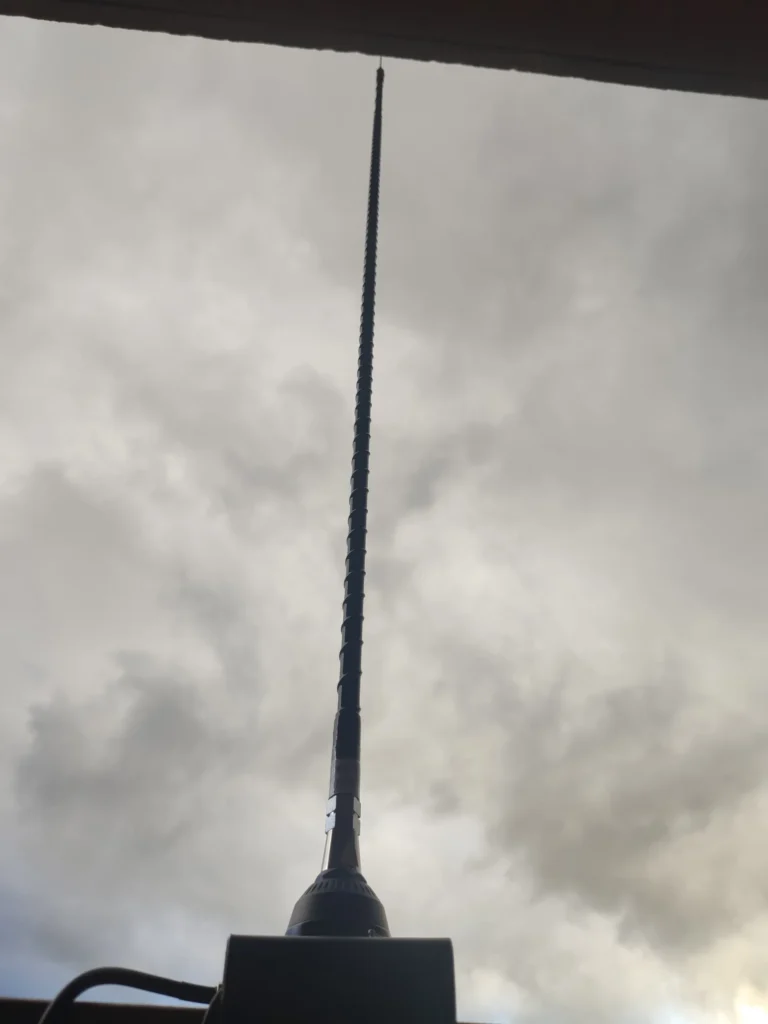
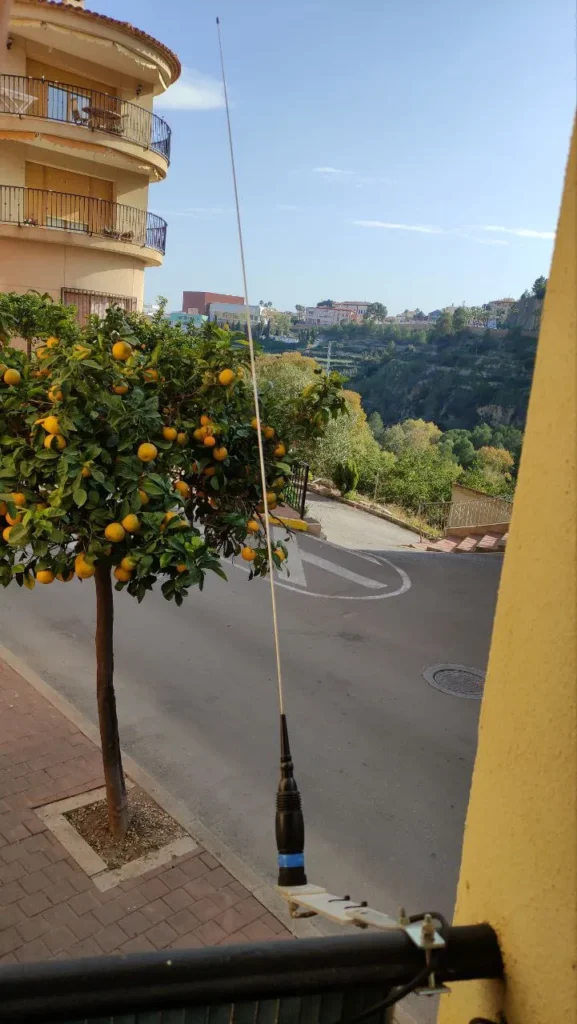
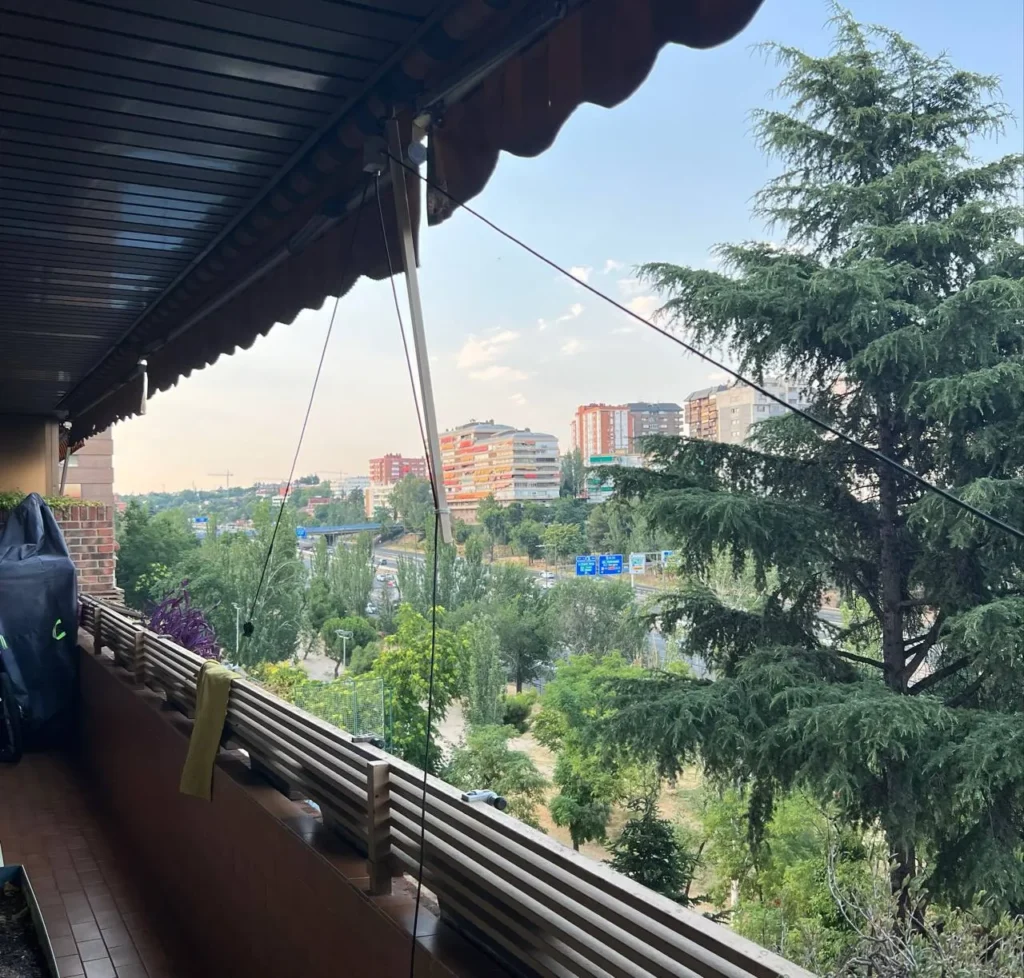
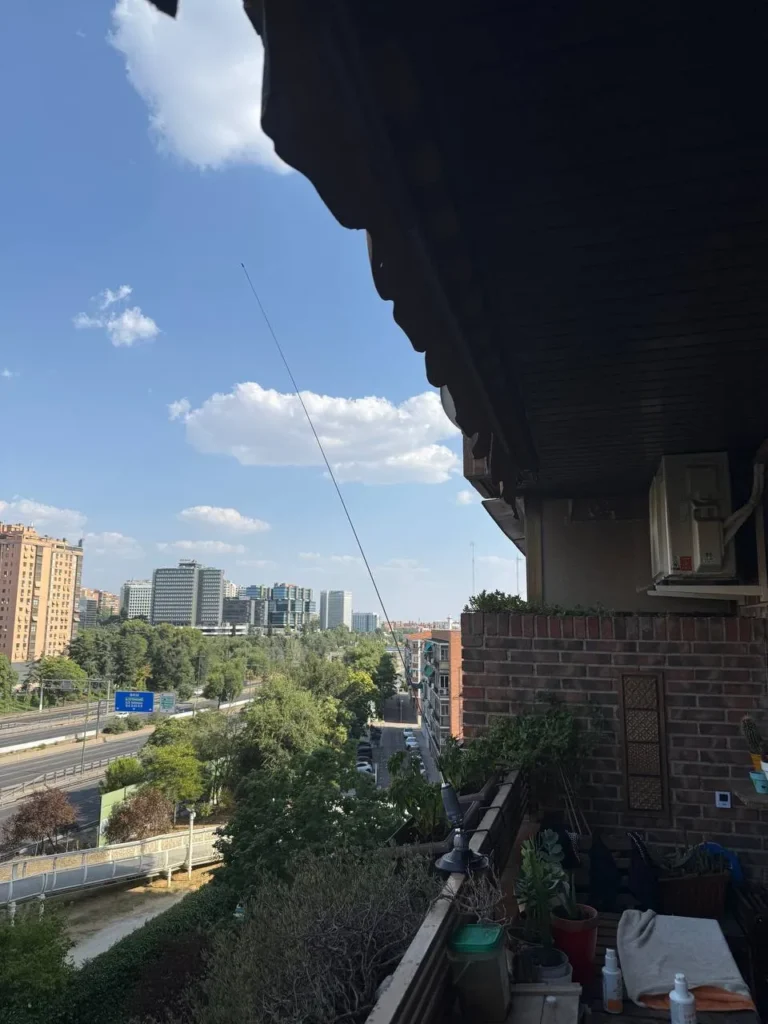
I’ve had an antenna on the balcony railing for years, in a flat at half height. What started as a test with the Citizens Band (CB) has become an essential part of my daily routine.
Limitations:
- Constant QRM from S7.5/S8. Any signal below S7 disappears.
- Shielding of the building itself: I lose most of Europe, but I have a clear view towards North America and South America.
And even with that, when propagation is favorable, I have worked Europe, Russia and even Asia. That said, many days you see activity in the cluster but you hear nothing. So, I don’t call anymore: only reply. This way I don’t frustrate other operators who might hear me but I don’t hear them.
Which balcony antenna to choose (according to space and band)
Citizens Band (CB)
- Sirio Boomerang (available in two sizes). An acceptable option. But if you’re after discretion, watch out for the radial — it can visually give you away.
VHF/UHF
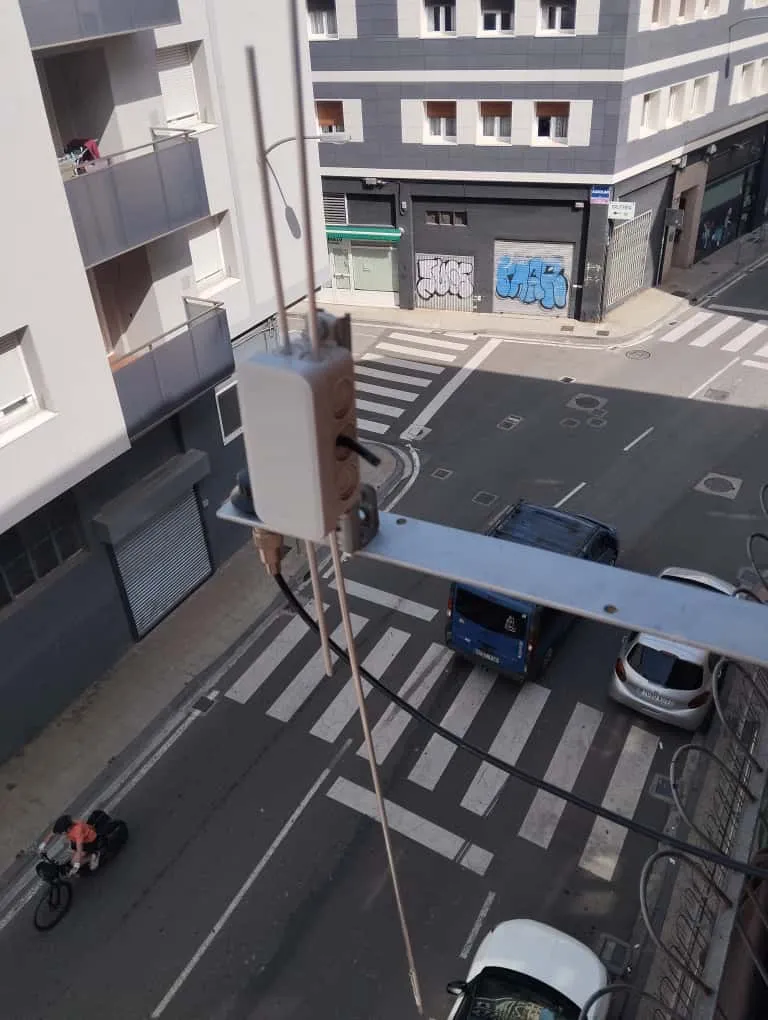
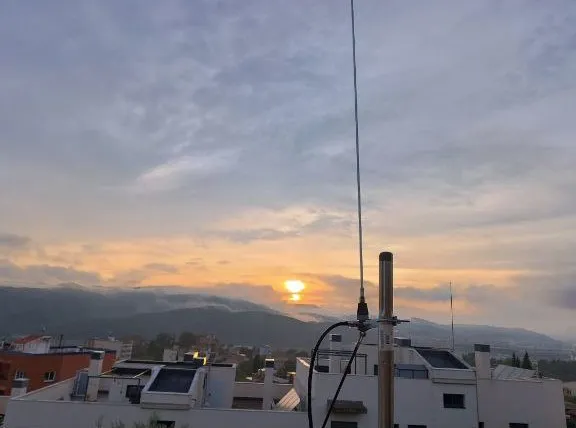
- Directional Yagi Ideal for satellite activities or urban communications.
Vertical or horizontal dipole.
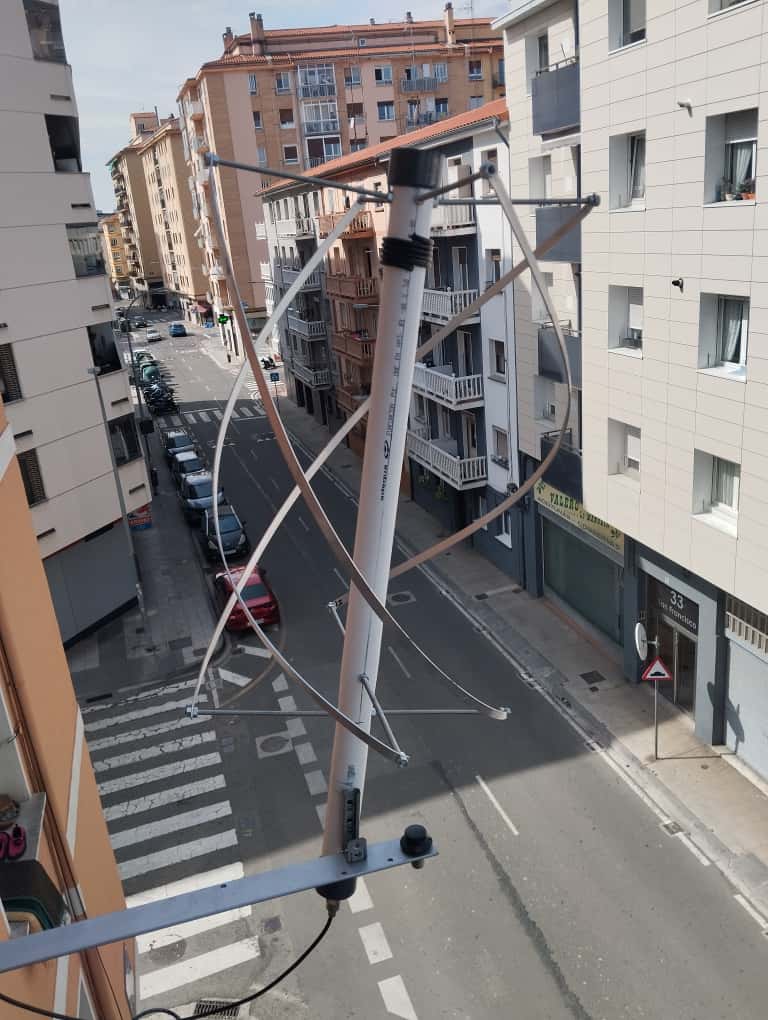
The wildcard
- Mobile antennas: available for all bands and sizes (short-circuited or not). Very versatile, but require more technical work to function well.
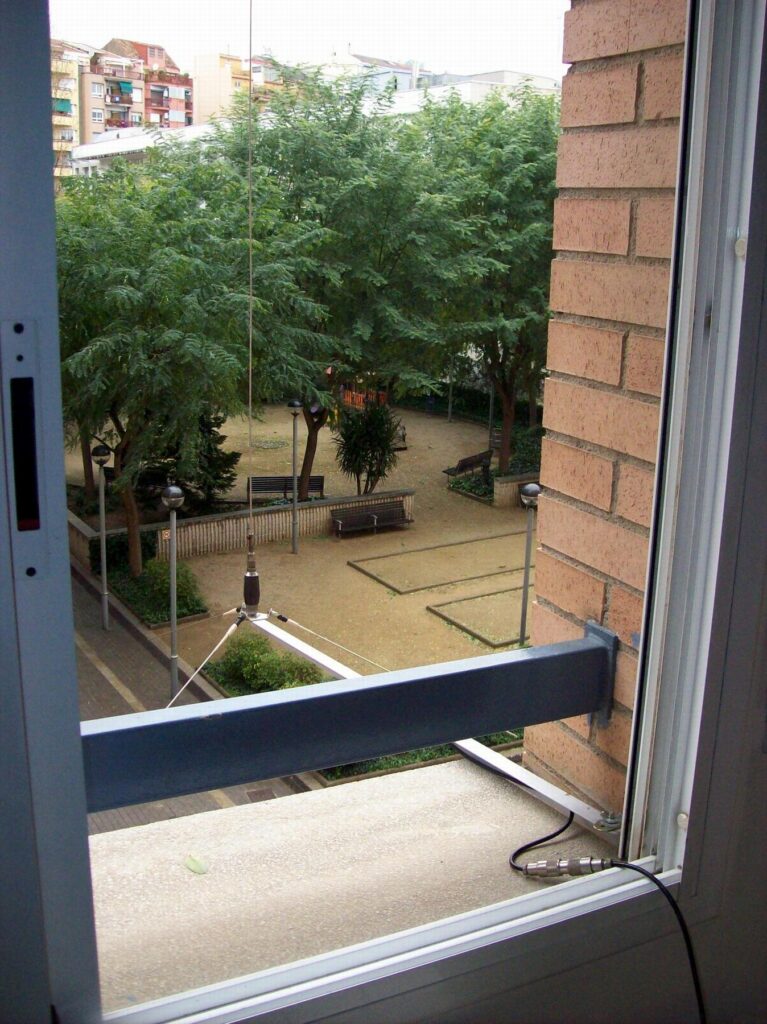
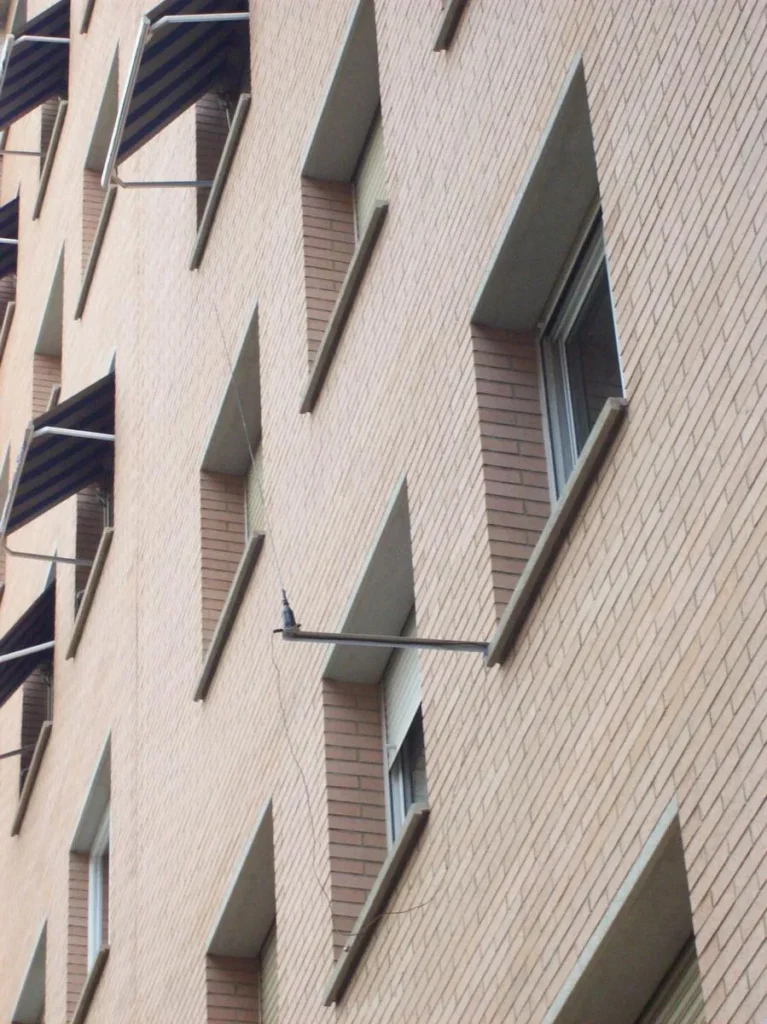
using a wire as ground plane.
How to optimize your balcony antenna: technical tips
Ground plane
Mobile antennas need a generous ground plane to function well. The lack of one is one of the main causes of high ROE, RF inside the house and problems with neighbors.
- If you use a metal railing, part of the work is already done.
- If not, you can simulate it with radials: use wire pieces at 75% of 1/4 wavelength. Experiment:
- Put a wire to one side and measure ROE.
- Move it, add another, shorten or lengthen. Sometimes what works defies logic.
Position and separation
- The antenna should be as far away from the wall and nearby objects as possible If it is on a balcony railing, ideally place it in the center of the balcony.
- If it is in a window, keep it well separated and centered to act like a guitar string’s resonator
- It should never touch anything If it’s very long and hits the upper balcony, tilt it outward.
RF clash
- Place an isolation near the base of the antenna to prevent coaxial acting as a counterantenna.
Domestic interference
- If you transmit and your keyboard turns off, monitor or any appliance behaves strangely, fix it immediately. If this happens to you, it’s likely happening to your neighbor too.
Coexistence above all
- If a neighbor complains about aesthetics, consider removing it or using it only on specific occasions.
- If there are interference issues, you shouldn’t use it until you resolve the issue. Never enter conflict with neighbors.
Home radio is possible (though not perfect)
Transmitting from home, even with modest means, is a blessing, especially after a day at work. And if you combine it with weekend outings to the field, where you can set up more efficient antennas and enjoy less QRM, the experience is complete.
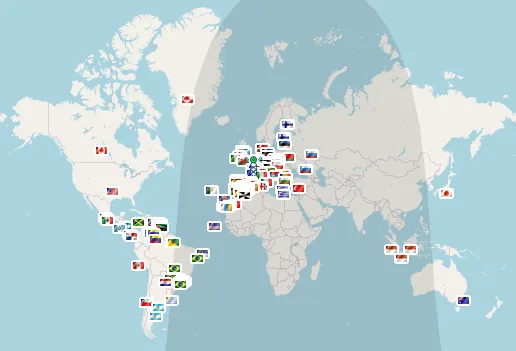
Here’s an example of contacts I’ve made with a 30 € car antenna:
And here some in FT8:
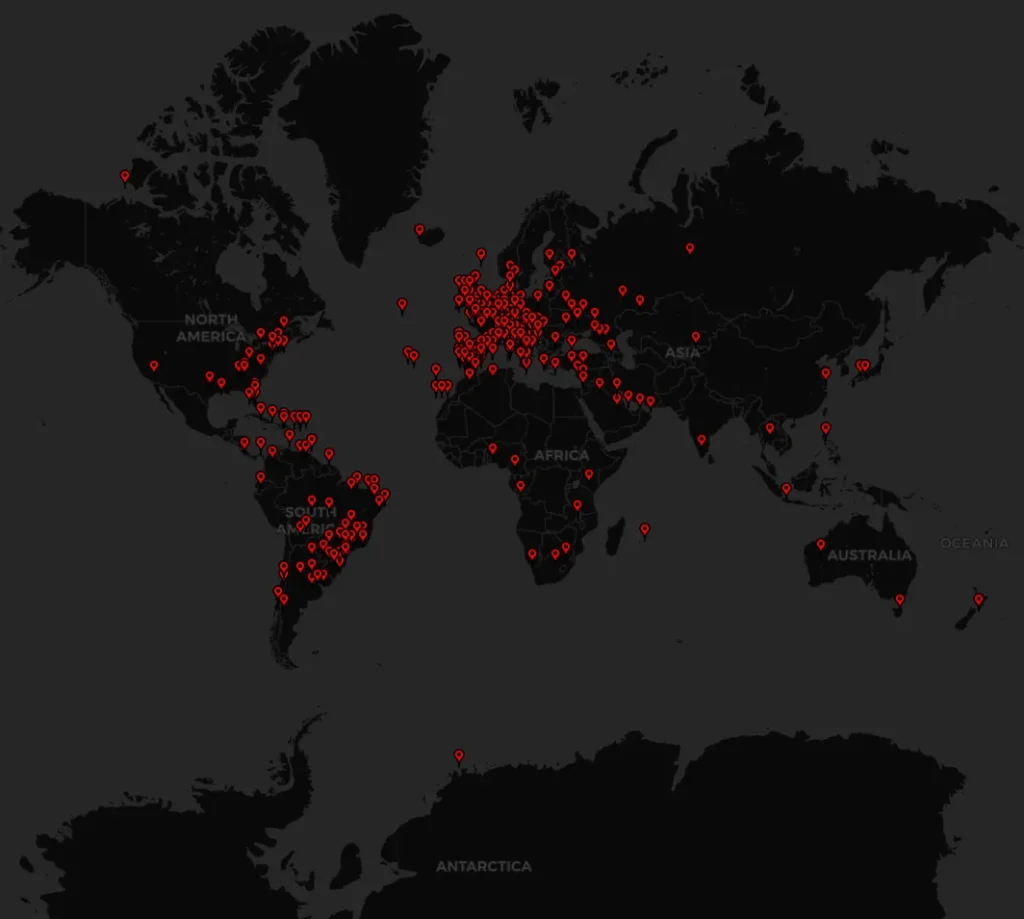
As you can see, I’m not going to break any records, but I’m having fun like a kid.
All this in the high bands of HF. Can you imagine what you could achieve on 40m for example?
The balcony antenna is not an excuse, it’s a trench
Starting with a balcony antenna isn’t just for beginners. It’s for anyone who wants to keep the hobby alive without big deployments.
The day you can set up an installation ‘like God ordered’, do it, you’ll thank yourself. But that day doesn’t find you with the spark for radio forgotten in a box of cardboard stacked in the attic. Radio is persistence, curiosity and willpower.
It’s time to come out of the closet: We’re many balconers and we have nothing to hide. Because we do a lot, with very little, and that too has to be counted.
Other articles you might find interesting:
From Analog Clicks to Digital Bits. The Unbreakable Evolution of the Amateur Radio
Tutorial guide for creating an 11-meter call sign step by step