Top 10 Devices for Security and Pentesting
Hello, dear readers.
This is written by someone passionate about radio — a world that spans everything from amateur radio to information security. My interests and hands-on work in this field are broad and, over time, have shifted toward signal exploration and wireless pentesting.
Many winters ago, when Kali Linux was barely taking its first steps after being renamed from BackTrack over rights issues, I was running one of its early versions on a humble, sluggish Raspberry Pi B+. I would plug in an Alfa Wi-Fi antenna and spend hour after hour tinkering.
My curiosity did not stop there. I soon became interested in GSM networks and, when DVB-T RTL-SDR USB dongles started gaining popularity, I got one for a little over €6. That tiny USB device opened the door to a whole new universe. It was as if, after a lifetime of seeing everything blurry, I put on a pair of glasses and suddenly everything came into perfect focus.

These days, even in the most remote corners of the world we are surrounded by radio signals, covering a spectrum of frequencies as vast as Netflix’s catalog of shows. In this hyper-connected world, millions of devices are constantly transmitting and receiving signals: from amateur radio operators having a quiet chat to the most advanced, encrypted wireless communication protocols.
That is why I have decided to put together this Top 10 of tools for playing with radio-frequency signals, focusing on pentesting use. Like any good ranking, the tools are ordered from number 10 down to number 1.
Now, I would love to say this list contains the best devices you can buy or use, but the truth is there is no single “best”. I have not ranked the devices by power, price, versatility, ease of use or popularity. The fact is that in some cases one tool will be ideal and in others, a completely different one.
I have picked affordable, accessible products to introduce you to, avoiding those aimed exclusively at professional use.
Some of these gadgets have plenty of uses outside cybersecurity while staying within the radio-frequency field.
What is certain is that many of you, after reading this list, will want to own them all.
10. MonstaTek M1 – The Multi-tool for Hackers

The MonstaTek M1 is a device designed specifically for security experts and ethical hacking enthusiasts looking for a versatile, portable tool. Unlike other, more specialized devices, the M1 combines multiple functions in a single unit, which makes it an attractive option for security testing on networks, RFID and Bluetooth.
Although it does not yet have as large a support community as other devices on this list, its potential lies in its modularity and compatibility with advanced pentesting tools.
Features:
- 32-bit ARM Cortex processor, with enough power for demanding tasks.
- Wi-Fi and Bluetooth 4.2 for network audits and targeted attacks.
- Built-in RFID and NFC, perfect for reading, cloning and emulating cards.
- USB-C port and MicroSDHC slot (up to 256 GB) for storing scripts and exploits.
- Infrared transmitter and receiver for playing with electronic devices.
- Customizable firmware, compatible with development environments like Python and C++.
Pentesting uses:
- Wi-Fi auditing – packet capture, detection of vulnerable networks and deauthentication attacks.
- RFID/NFC manipulation – security testing on access control systems.
- USB HID attacks – simulating a malicious keyboard for command injection.
- IoT device assessment – scanning and analyzing vulnerabilities in connected infrastructure.
- Exploit automation – storing and running payloads with custom scripts.
Limitations:
- Lack of a support community – compared with more popular tools, there is less documentation and fewer active forums.
- Steep learning curve – its full potential requires advanced programming and networking knowledge.
- Limited compatibility – not all RFID/NFC systems are supported.
9. M5Stack – Modular Power for Ethical Hackers
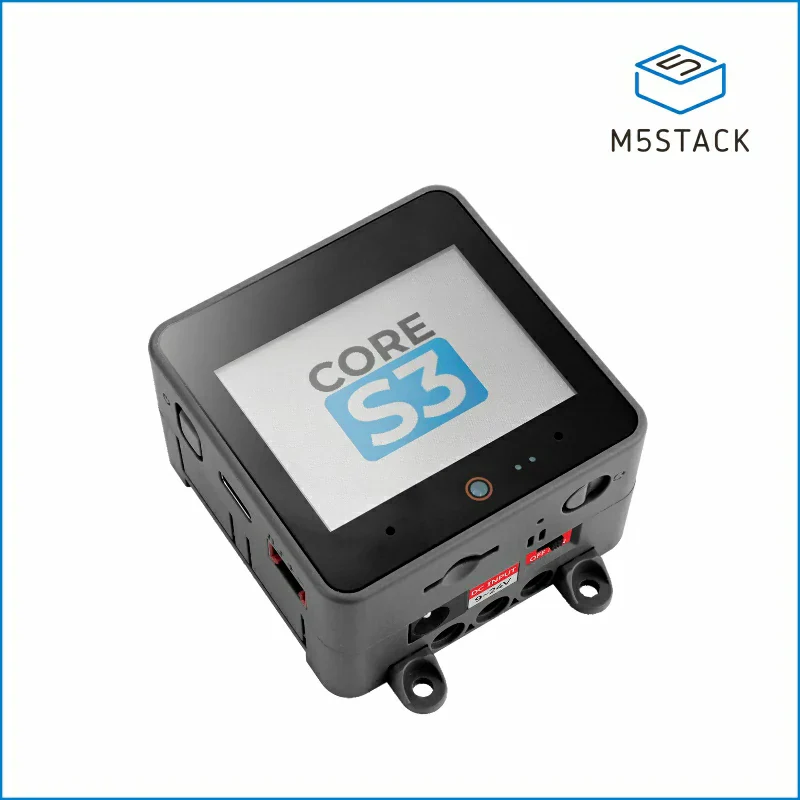
The M5Stack is an ESP32-based development ecosystem that has gained popularity in the pentesting community thanks to its flexibility and customization. It allows integration with a range of modules and sensors, which makes it an attractive option for building purpose-specific security testing tools.
Unlike other pre-configured options, the M5Stack requires programming knowledge to get the most out of it. That said, its compatibility with platforms like MicroPython and Arduino makes it easy to integrate into advanced pentesting workflows.
Features:
- ESP32 microcontroller with Wi-Fi and Bluetooth connectivity.
- 2-inch TFT LCD screen for monitoring attacks in real time.
- Expansion via modules and sensors, making it highly customizable.
- Internal battery and USB-C port for maximum portability.
- Compatible with MicroPython, Arduino and UIFlow for custom programming.
- Integration with tools like Wireshark and Kismet for analyzing traffic on wireless networks.
Pentesting uses:
- Wi-Fi network scanning – traffic capture and detection of vulnerable networks.
- USB HID attacks – it can be programmed as a Rubber Ducky.
- RFID/NFC manipulation – reading and cloning with add-on modules.
- Bluetooth exploration – identifying exposed devices.
- Security-test automation – custom scripts and exploits.
Limitations:
- Requires advanced knowledge – it is not a ready-to-use device without prior programming.
- Limited to its own ecosystem – it depends on add-on modules to extend its functionality.
- Not a complete solution – it lacks native support for certain more advanced pentesting tools.
8. DSTIKE Deauther Watch SE – The Wi-Fi Chaos Watch
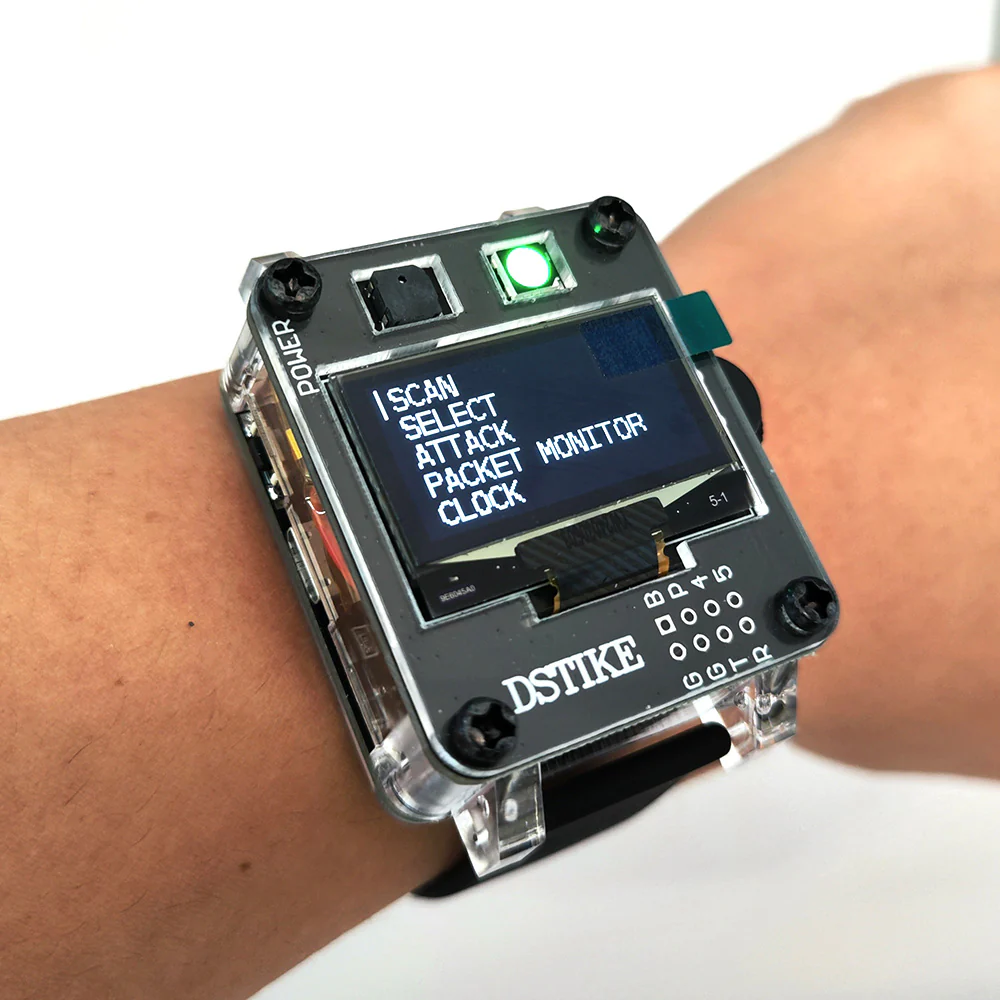
The DSTIKE Deauther Watch SE is one of the most compact and discreet tools for Wi-Fi security testing. Based on the ESP8266 microcontroller and designed specifically to carry out deauthentication attacks on wireless networks, it is a popular choice among pentesters and cybersecurity enthusiasts. Its watch form factor makes it ideal for field audits without drawing attention, although its functionality is limited to deauthentication attacks and it cannot capture packets or run advanced attacks.
Features:
- Based on the ESP8266 microcontroller with built-in Wi-Fi.
- Deauther firmware preinstalled.
- OLED screen with a simple graphical interface.
- Long-lasting rechargeable battery.
- Watch-style design to stay inconspicuous in field tests.
- Intuitive control interface using physical buttons.
Pentesting uses:
- Deauthentication attacks – kicking devices off a Wi-Fi network.
- Wi-Fi security assessment – identifying networks vulnerable to these attacks.
- Resilience testing in corporate environments – simulating connection outages.
Limitations:
- Limited functionality – it only allows deauthentication attacks, with no advanced Wi-Fi auditing options.
- Easily detectable – on networks with advanced security measures, its activity can be blocked quickly.
- Not compatible with WPA3 – it is only effective on WPA2 and open networks.
7. EvilCrow-RF – The Tool for Manipulating Low Frequencies
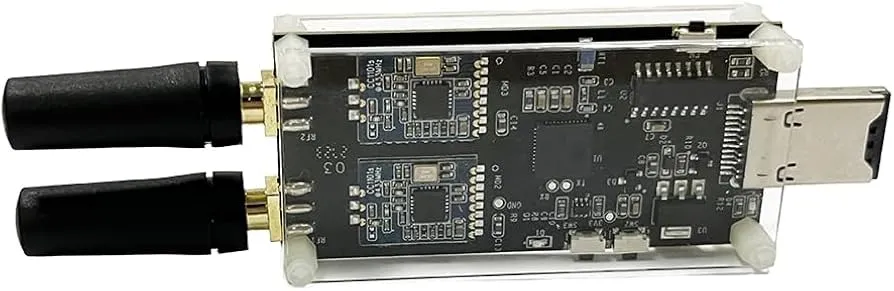
The EvilCrow-RF is a radio-frequency (RF) signal analysis and manipulation tool designed for pentesters and cybersecurity enthusiasts. Its focus is on exploring and security-testing low frequencies, allowing the reception, transmission and analysis of signals from devices operating between 300 MHz and 928 MHz. It is especially useful for assessing vulnerabilities in remote controls, wireless access systems and IoT devices that rely on RF to function. Although it is not as versatile as advanced SDR tools, its ease of use and low cost make it an attractive option for experimentation in the field of
Features:
- STM32 microcontroller.
- Supports frequencies from 300 MHz to 928 MHz.
- Can transmit and receive RF signals.
- Compatible with AM, FM and ASK modulation.
- USB interface for connecting to computers and automated scripts.
- Compatible with SDR analysis tools like GQRX and Universal Radio Hacker.
Pentesting uses:
- Security analysis of RF devices – electronic locks, alarms, remote controls.
- Cloning and replaying RF signals – assessing vulnerabilities in wireless systems.
- Simulating RF DoS attacks – disrupting signals in controlled environments.
- Studying RF communication protocols – security assessment of IoT devices and industrial systems.
Limitations:
- No support for high frequencies – its operating range is limited to low frequencies.
- Lack of advanced documentation – it requires prior RF knowledge to use it properly.
- Less versatile than the Flipper Zero – other, more complete tools can replace its functionality.
6. ESP32 Marauder – Versatility in Wireless Security
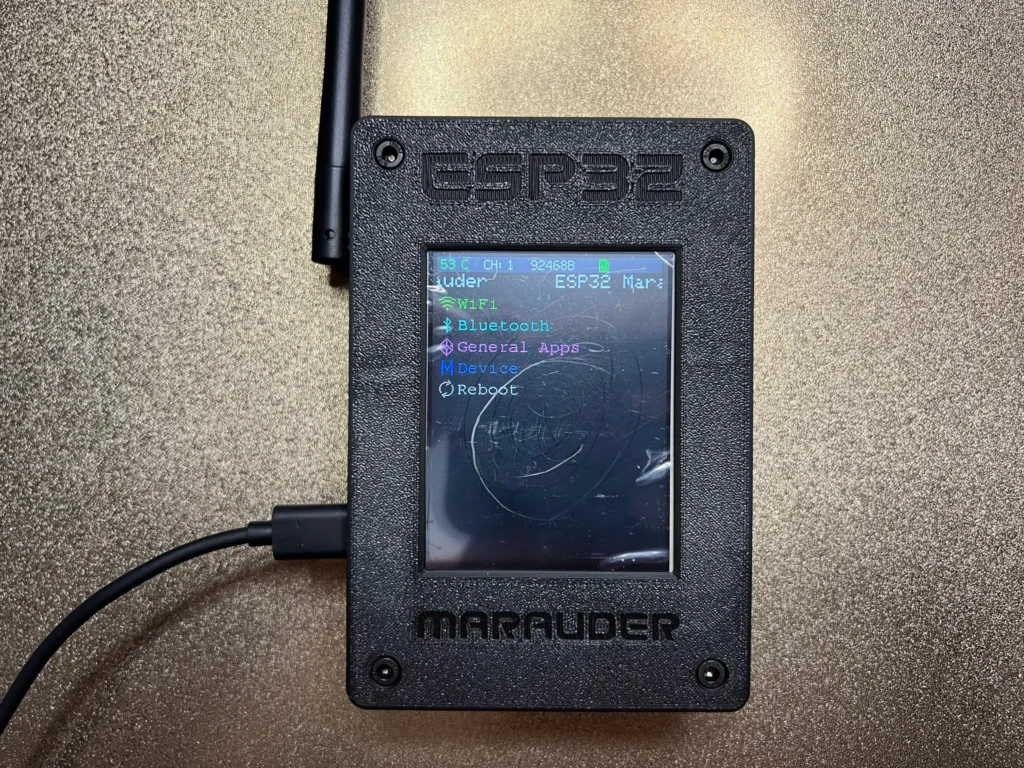
The ESP32 Marauder is a wireless auditing tool that expands on the capabilities of the Deauther Watch SE, adding support for Wi-Fi, Bluetooth and RFID. Its versatility makes it an interesting option for pentesters who need a compact, powerful solution for auditing networks and connected devices.
Features:
- Based on the ESP32 with Wi-Fi and Bluetooth connectivity.
- Custom firmware for wireless security audits.
- Support for Wi-Fi, Bluetooth and RFID attacks.
- Built-in OLED screen for real-time data display.
- Long-lasting rechargeable battery.
Pentesting uses:
- Wi-Fi network auditing – it allows deauthentication attacks, network scanning and AP spoofing.
- Bluetooth security assessment – scanning for vulnerable Bluetooth devices.
- RFID manipulation – security analysis of access cards and NFC systems.
- Combined attacks – the ability to run simultaneous attacks across different wireless technologies.
Limitations:
- Dependence on a controlled environment – its effectiveness drops on networks with advanced security measures.
- Not a complete solution – it lacks advanced tools for deep traffic capture and analysis.
- Limited to certain RFID types – it is not compatible with every access control system.
5. Raspberry Pi – Power and Modularity
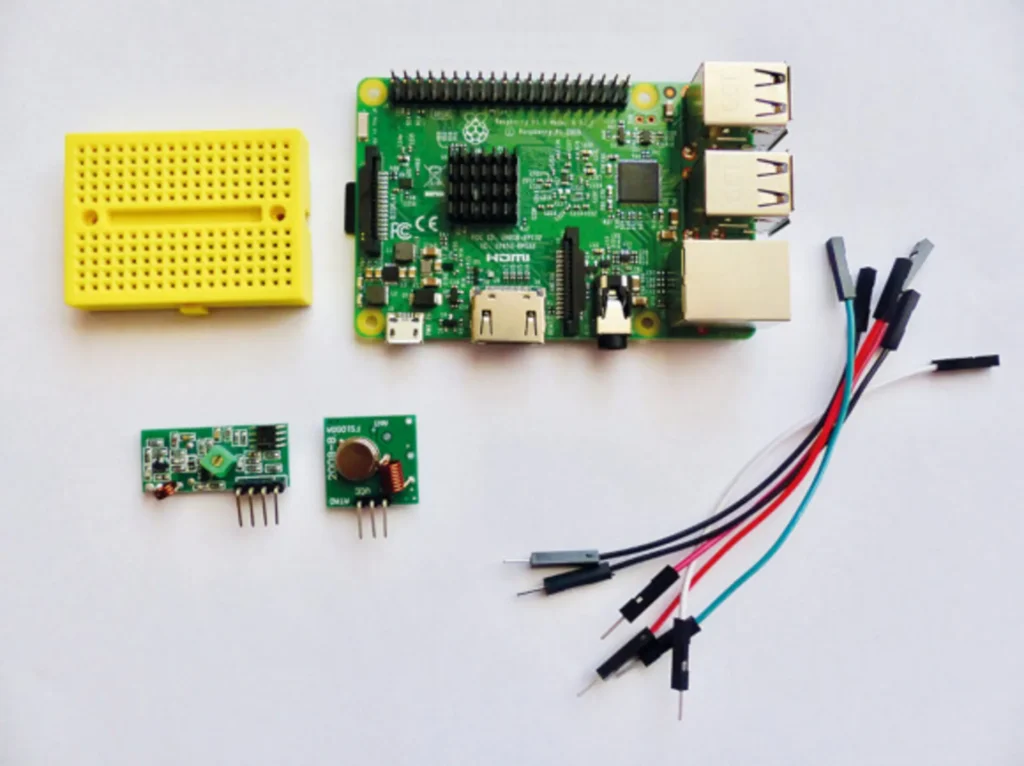
The Raspberry Pi, combined with apps like Universal Radio Hacker or Aircrack-ng, a wide range of RF modules and RTL-SDR dongles, is one of the most versatile tools for security testing on IoT, RF and wireless networks. Its expandability and compatibility with many tools make it a tool for any use.
Features:
- Quad-core ARM Cortex-A76 processor.
- Compatible with specialized operating systems like Kali Linux and Parrot OS.
- Expansion via GPIO and USB to add extra hardware.
Pentesting uses:
- Wi-Fi and Bluetooth analysis – scanning, packet capture and MITM testing.
- RF auditing – studying signals from IoT and home-automation devices.
- Advanced SDR attacks – interception and analysis of communications.
- Pentesting automation – custom scripts with Metasploit and Bettercap.
Limitations:
- Steeper learning curve – it requires RF and Linux knowledge.
- Not portable out of the box – it needs external modules for greater versatility.
- Power consumption – depending on the workload, it may need more powerful power supplies.
4. Pwnagotchi – AI for Capturing Wi-Fi Handshakes
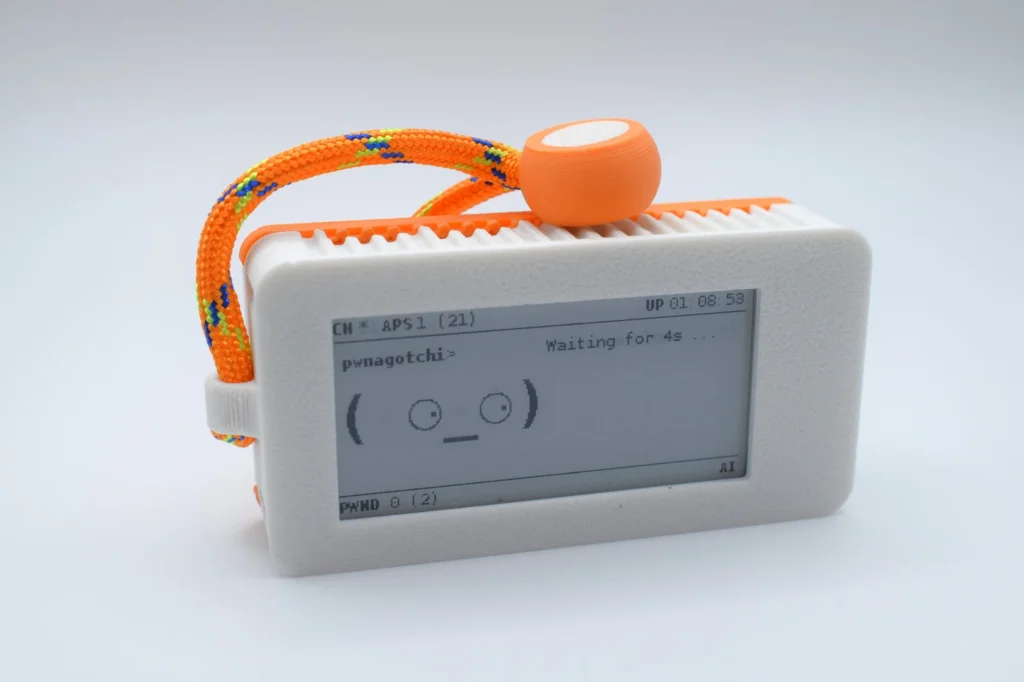
The Pwnagotchi is a portable device that uses artificial intelligence to capture WPA/WPA2 handshakes autonomously. Based on reinforcement learning, it improves its performance over time, making it ideal for pentesters and cybersecurity enthusiasts. Compatible with Bettercap and highly customizable, it is an innovative tool for auditing Wi-Fi networks.
Features:
- Compatible with the Raspberry Pi Zero.
- Graphical interface on an e-ink screen.
- Uses reinforcement learning to optimize handshake capture.
- Integration with Hashcat and Aircrack-ng.
Pentesting uses:
- Capturing WPA/WPA2 handshakes – makes cracking Wi-Fi keys easier.
- Attack optimization – it learns and improves its efficiency over time.
- Passive, discreet auditing – it can operate without constant supervision.
Limitations:
- Requires prior training – its performance improves with continued use.
- No support for active attacks – it does not crack directly, it only captures data.
- Specific hardware – it works best on a Raspberry Pi Zero with specific Wi-Fi adapters.
3. HackRF One – The Ultimate SDR Tool
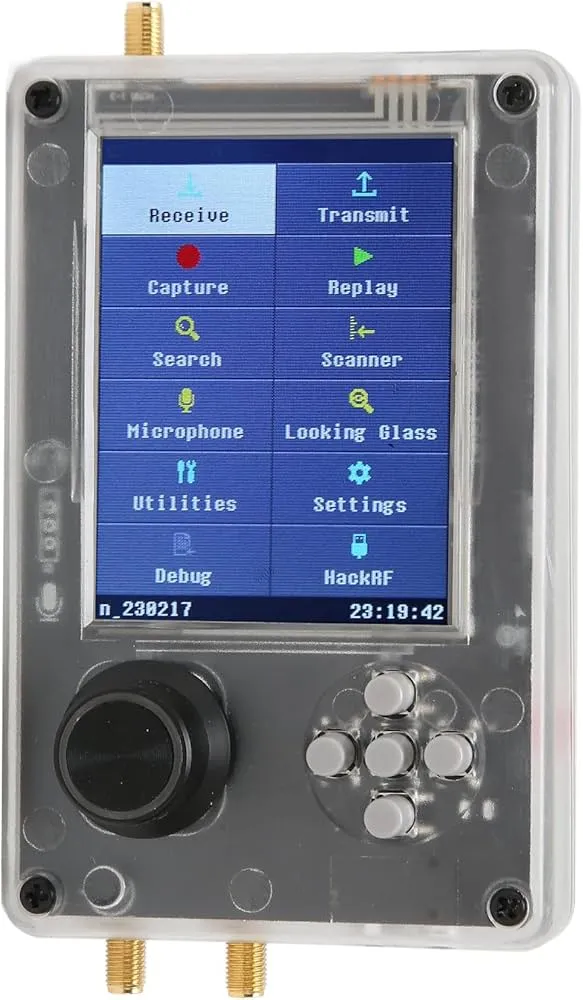
The HackRF One with a PortaPack is one of the most advanced low-cost tools in the world of radio-frequency (RF) signal analysis and manipulation. Its ability to transmit and receive across a wide frequency range makes it essential for pentesters working with SDR (Software Defined Radio). It is a powerful choice for security research on wireless communication systems, protocol analysis and advanced attacks in controlled environments.
Features:
- Frequency range from 1 MHz to 6 GHz.
- Supports transmitting and receiving RF signals.
- Bandwidth of up to 20 MHz.
- Compatible with SDR tools like GNU Radio, SDR# and Universal Radio Hacker.
- Optional PortaPack that adds stand-alone operation and portable functionality.
- Updatable firmware with constant improvements from the community.
Pentesting uses:
- RF signal analysis and cloning – capturing and replaying signals from wireless devices such as alarms, remote controls and access systems.
- Wireless communications auditing – scanning and security analysis of technologies like GSM, LoRa and industrial systems.
- Simulating jamming attacks – assessing how well devices withstand jamming attempts and denial of service (DoS).
- RF protocol manipulation – reverse engineering and modifying wireless communication protocols.
- IoT security research – assessing vulnerabilities in devices connected to wireless networks.
Limitations:
- Steep learning curve – advanced use requires solid RF and SDR knowledge.
- Not full-duplex – it cannot transmit and receive at the same time.
- Needs extra hardware – it requires specific antennas and filters to get the best performance at different frequencies.
2. Flipper Zero – The Swiss Army Knife of Pentesting
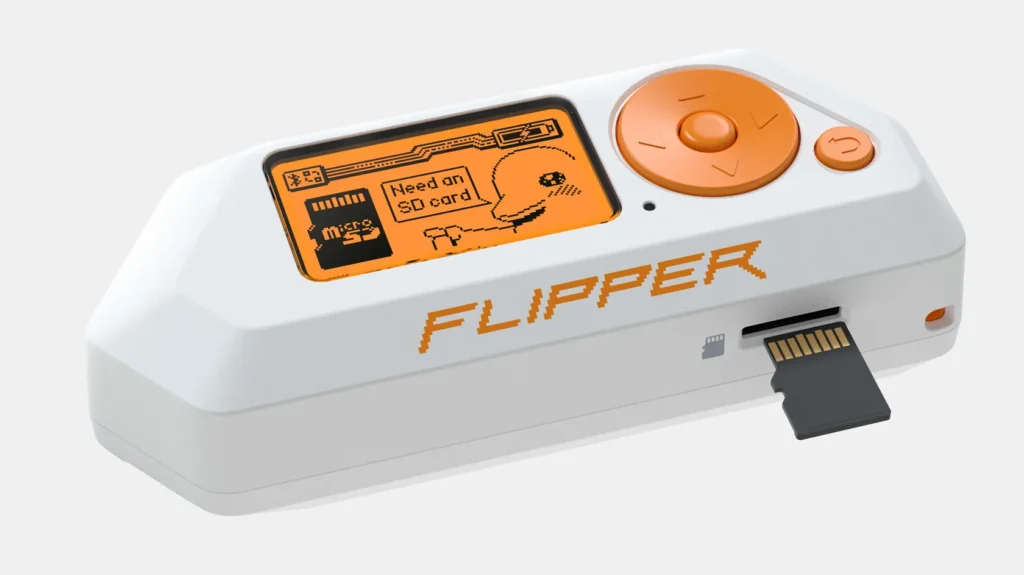
The Flipper Zero has become one of the most popular tools in the cybersecurity community thanks to its versatility and ease of use. Designed as a portable security device, it lets you interact with multiple wireless and access technologies, such as RFID, infrared (IR), Bluetooth, NFC and radio frequency. Its modular approach and intuitive interface make it accessible to professionals and ethical hacking enthusiasts alike.
Features:
- RFID and NFC compatibility for reading, cloning and emulating access cards.
- Control of IR devices, emulating remote controls and other infrared devices.
- Bluetooth connectivity for security testing on IoT devices and MITM attacks.
- Ability to transmit and receive RF signals.
- Low-power LCD screen and customizable firmware.
- Expandable USB and GPIO interfaces for connecting add-on modules.
Pentesting uses:
- RFID/NFC auditing and cloning – capturing and emulating access cards.
- IR device analysis and control – scanning and replicating infrared signals.
- Bluetooth security testing – analyzing insecure connections and MITM attacks.
- RF signal manipulation – capturing and transmitting signals from wireless devices.
- Security-test automation – using custom scripts and modules for advanced testing.
Limitations:
- No SDR support – it does not allow advanced RF analysis like the HackRF One.
- Some features require modified firmware – some advanced capabilities depend on unofficial software.
- Limited Wi-Fi attacks – it does not include native tools for Wi-Fi auditing, although it can be paired with other devices.
1. RTL-SDR V4 – Low-Cost RF Exploration and Pentesting
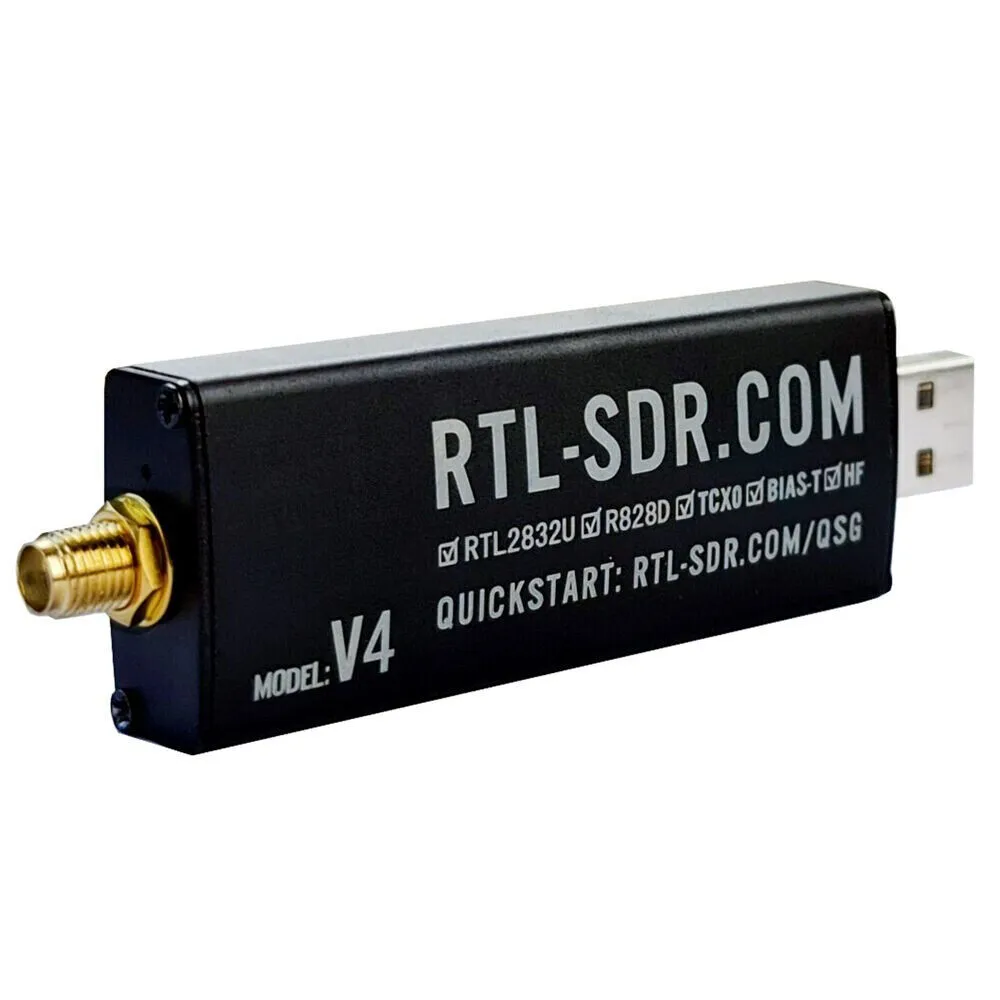
At the top of the list is the RTL-SDR V4 — one of the most accessible and versatile tools for RF analysis in security and pentesting settings. I owe a lot to devices like this, and I think they marked a before and after in the world of amateur radio and signal analysis.
Unlike devices like the HackRF One, the RTL-SDR stands out for its low cost and ease of use, which makes it an excellent way to get started in RF signal exploration. Thanks to its large support community and compatibility with many SDR analysis programs, it has become a standard in cybersecurity and RF research.
Features:
- Extended frequency range: 500 kHz to 1.7 GHz, letting you capture a wide range of signals.
- Greater sensitivity and reduced noise, improving reception quality.
- Interference-reduction filter, improving signal capture in noisy environments.
- Compatible with multiple SDR tools, including Universal Radio Hacker (URH), GNU Radio, SDR# and Gqrx.
- Easy-to-use USB connection, with no need for specialized hardware.
Pentesting uses:
- Capturing and analyzing RF communications – the RTL-SDR V4 lets you capture and analyze radio signals across different frequency bands, making it easier to spot vulnerabilities in wireless security systems.
- Scanning and decoding IoT device signals – many IoT devices use frequencies in the 433 MHz and 868 MHz bands. With this device, you can identify weak protocols and assess the security of those systems.
- Monitoring wireless networks and satellite communications – with the right setup, the RTL-SDR V4 can receive amateur radio, weather, aeronautical and some satellite transmissions, which broadens its security applications.
- Assessing vulnerabilities in public-safety communications – using compatible SDR software, you can analyze the resilience of communications on radio systems used by emergency and security services, always within a legal and ethical framework.
Limitations:
- No transmit capability – it can only receive signals, which limits its use in advanced signal-injection testing.
- Requires software and initial setup – although its community makes learning easier, it can be tricky for beginners.
- Smaller frequency range than the HackRF One – but enough for most security analysis applications.
There are plenty of SDRs freely accessible over the internet from which you can view and listen to radio signals of practically any kind.
I invite you to look at the 433 frequency on this site’s own SDR and you will see how many signals come from vehicles driving down the street reporting data like tire pressure, along with numerous weather station reports.
You can also visit this article introducing radio signal identification, or this other one on the evolution of amateur radio.