Identifying Radio Signals with the Signal Identification Guide (SIGID)
Radio waves are everywhere, carrying communications that range from military messages to satellite signals. For the curious who want to unravel these mysteries, the Signal Identification Guide has become an indispensable resource. This collaborative wiki is a meeting point where hobbyists and professionals can classify and discover all kinds of radio-frequency signals, sharing knowledge and contributing to the collective analysis.
What is the Signal Identification Guide?
The Signal Identification Guide is an open, community-run platform designed to help users identify radio-frequency signals through a collaborative database. Used mainly by radio amateurs and people operating software-defined radios (SDR), this wiki lets users compare unknown signals with existing examples, making them easier to identify and analyze.
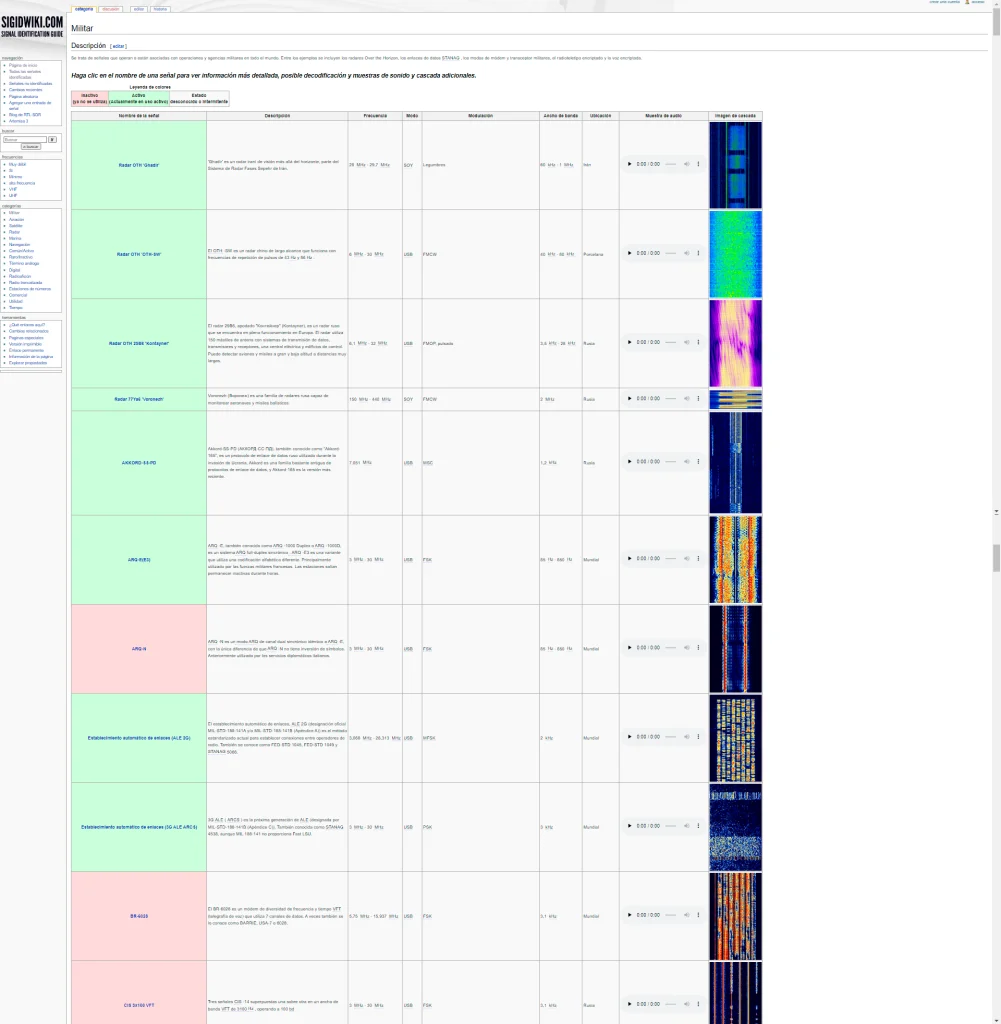
The platform is organized into several categories covering a broad range of signals:
- VLF, LF, MF, HF, VHF, UHF: frequency range from very low to ultra high frequency.
- Military: defense-sector communications and signals.
- Aviation: aircraft communications and radars.
- Satellites: signals from satellites in orbit.
- Radar: signals from detection systems.
- Maritime: naval communications and navigation systems.
- Navigation: land and marine guidance systems.
- Common/Active: common signals.
- Rare/Inactive: infrequent or discontinued signals.
- Analog: AM, FM, SSB.
- Digital: digital communication systems such as DMR or TETRA.
- Amateur radio: communications between amateur radio operators.
- Trunked radio: shared radio networks.
- Number stations: transmissions linked to espionage.
- Commercial: signals used in the commercial sector.
- Utility: public-service communications.
- Time: signals related to timekeeping and time measurement.
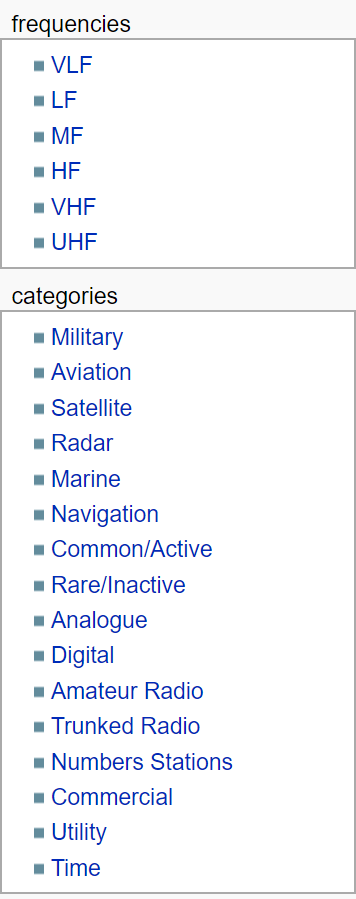
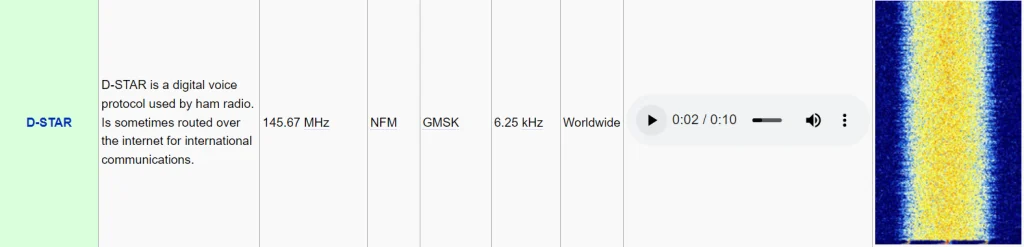
Each SIGID entry includes waterfall images, which give a visual representation of the signal over time and across the spectrum. These images let users compare the signals they have picked up with the visual representations provided, helping to identify common patterns and features. Audio recordings are also included so you can listen to the signal directly, something essential for accurate identification.
The community: the heart of the Signal Identification Guide
One of the most interesting things about SIGID is its collaborative nature. Users can add new signals, update descriptions and correct errors, which keeps the database constantly evolving. Although some older or less common signals may be incomplete, the steady stream of new contributions makes the database grow organically, fostering a collaborative learning environment.
It is a dynamic resource in which anyone, regardless of their level of knowledge, can take part and contribute to the collective analysis of radio signals.
What makes exploring radio signals so special?
Listening to the radio spectrum may sound like a technical activity, but it is really like opening a window onto an invisible world full of fascinating communications. Picking up an unknown signal can lead you to research everything from aircraft transmissions to number stations (commonly associated with espionage). Through the Signal Identification Guide, you have the chance not only to listen to those signals, but also to help classify and identify them.
Software-defined radio (SDR) technology has also made this activity more accessible. With a cheap device and a computer, anyone can start exploring the spectrum and discover what kind of signals are floating around them.
The strength of the Signal Identification Guide lies in the global community behind it. If you have an SDR, or you just want to learn about what is going on in the radio spectrum, SIGID gives you the resource you need to begin your adventure in the invisible world of radio waves.