Teletext: the first web we could browse
Teletext: the first web we could browse
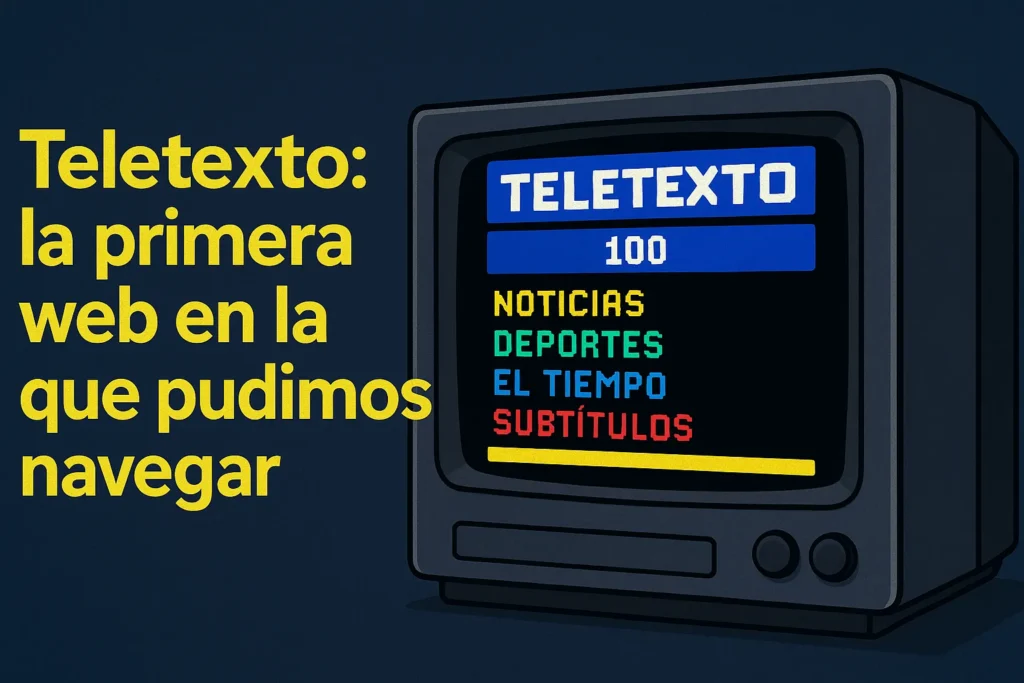
Today I want to talk to you about teletext. A technology that doesn’t just deserve this article, but a little corner in our nostalgic hearts.
Before the Internet, before Wi-Fi, even before the noisy modem that shrieked like a gremlin, there was a magical — and silent — way to access information: teletext.
If you had a TV in the 90s, you definitely pressed the “TXT” button on the remote at some point and watched that black screen appear, full of blocky letters and mysterious numbers.
If that doesn’t ring a bell, don’t worry: as Might Guy would say, you still hold the power of youth.
But if you lived it… you know exactly what I’m talking about.
The magic of teletext
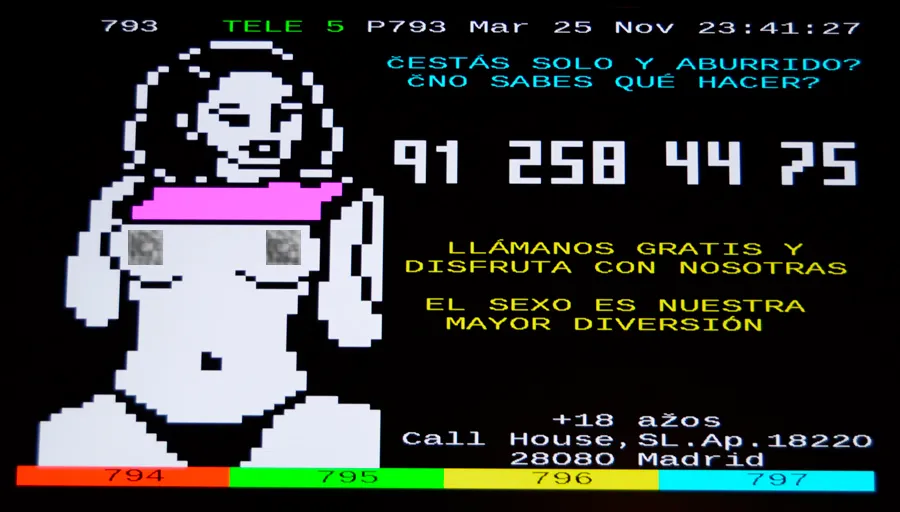
Funny thing: back in the 90s this used to air completely unfiltered on any TV set. In 2025, I’ve had to “pixelate the pixels” just to tell you about it. That’s how digital freedom progresses.
I used to spend hours exploring random pages, hunting for hidden treasures like someone casting spells.
145. 302. 615.
Just to see what came up. Sometimes nothing, sometimes something that left you speechless.
And okay, I’ll admit it: there were also those adrenaline moments trying to load the “adult ads” pages before my parents got home. This will sound silly to a lot of you now, but anyone who strained their eyes on Friday nights watching the scrambled Canal Plus signal knows exactly what I’m talking about.
I had no idea how it worked, but it had me hypnotised.
And the most surprising part: nobody was watching me. Nobody was tracking me.
It was a clean, direct, almost human little corner.
A small miracle hidden between lines of video that seemed to speak to you, and only you.
What is teletext?
Teletext was a system that made use of the analogue TV signal itself to send digital information: text, numbers and symbols encoded inside the video.
How did it do it? By using something that was already there but nobody could see: the invisible lines of the vertical blanking (the so-called Vertical Blanking Interval, or VBI).
In a standard PAL signal, each image had 625 lines, but only about 576 were used to display the actual picture.
The rest — the “blanking” lines between frames — were empty.
And that’s exactly where engineers slipped the data in.
Each VBI line could carry about 45 bytes of information, organised into small packets of 7 bits per character.
The television, if it had a teletext decoder, would read those hidden lines, translate the bits into letters and numbers, and display them on screen with basic colours and mosaic-style graphics.
The system’s pages were broadcast in a continuous loop, one after another, within the channel’s own signal.
If you requested, say, page 150, the TV had to wait for that page to come back around in the stream.
That’s why it sometimes took a few seconds to appear.
It was an elegant, simple trick: use the invisible part of the video to create a parallel stream of data.
A one-way information network that worked without the Internet, without cables, without permissions… just an antenna and a bit of ingenuity.
How teletext was born (and who invented it)
It all started at the British BBC, back in 1972.
A group of engineers led by Sir John Adams set out on a mission: to make television more accessible for deaf people.
That idea gave birth to Ceefax, the world’s first teletext system.
The principle was brilliant: use the invisible lines of the video — the ones the human eye never sees — to send text data.
The TV set, if it had the right decoder, would interpret them and display pages with news, results or subtitles.
Teletext in Spain: when TV also kept you informed
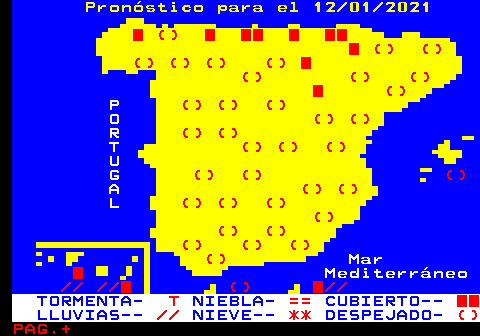
Ceefax officially started broadcasting in 1974. And in 1988 RTVE did the same in Spain, marking a turning point in how people got their news.
For years it was the most widely used tool by millions of people: journalists, sports fans, older people, and curious minds like mine.
In Spain, teletext became a sofa-and-remote-control classic.
Pages 100 and 200 were familiar territory: front page and sports.
Page 888 was a legend for deaf people: real-time subtitles, a huge social step forward.
RTVE, Antena 3, Telecinco and almost every channel adopted it.
And the best part: it was free. No subscriptions, no connection, no “terms and conditions”.
Teletext gave you information, full stop.
The decline, and its surprising resilience
When the Internet arrived, and later social media, teletext started losing its shine. But it never fully switched off.
In 2025, you can still press the “TXT” button on plenty of TVs and watch those blocky letters that refuse to die.
And not just in Spain. In several European countries, teletext is still alive and kicking.
Germany, Switzerland, Austria, Sweden and Denmark keep their services running, updating news and sports results daily.
In the Netherlands, NOS Teletekst is still so popular it even has its own official website and app that recreate the original look.
Meanwhile, the United Kingdom officially shut it down in 2012, though plenty of nostalgic fans still visit fan-made digital versions.
Teletext in the digital age
And what about the digital age? Yes, teletext travels through modern signals too.
On DTT (Digital Terrestrial Television), teletext data is embedded inside the channel’s MPEG-TS stream, letting compatible TVs keep showing the same old pages.
So even though teletext was born in the analogue era, it managed to adapt: it survives hidden away in the bits of digital television, waiting for someone to press the “TXT” button on the remote.
And if you enjoy tinkering, you’ll love knowing that nowadays you can decode teletext signals with an SDR (Software Defined Radio) receiver.
With a bit of patience and tools like TtxFromTS or StreamXpert, you can capture the stream from a digital (DVB-T) signal and pull out the old teletext pages, just as they looked back in the 90s.
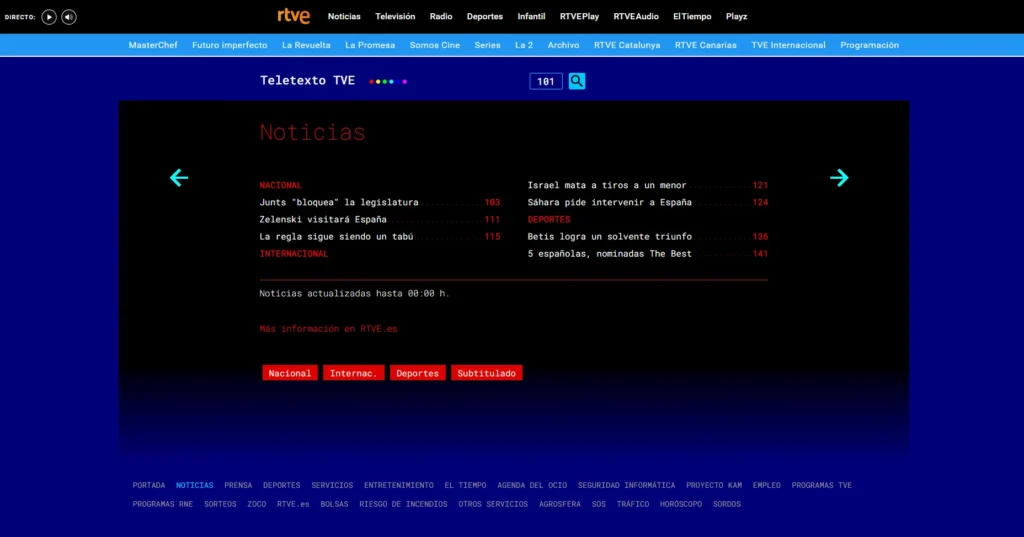
And if you’d rather just take a quick peek without any hassle, some channels let you access their teletext directly from the Internet.
For example, you can check RTVE’s from its own official website.
The spirit of teletext, and what it taught us
Teletext didn’t just transmit data. It transmitted an idea: information can be free, accessible and unconditional.
It didn’t need to know who you were to offer you something useful.
And today, that feels almost revolutionary.
Sometimes I think teletext was the last innocent technology: built to serve, not to collect.
And that’s why so many of us remember it with a mix of fondness and respect.
It was a small invention, sure. But also a symbol of a time when curiosity was enough.
Teletext was the first Internet without the Internet.
Other articles you might like:
Digital Privacy at Risk: How Cookies Fuel Mass Surveillance
Tutorial Guide to Installing and Using Privacy Badger
VPN: the urgent guide to taking back control of your digital life