APRS – The Automatic Packet Reporting System in Amateur Radio

The Automatic Packet Reporting System (APRS) is a communications system developed for amateur radio that allows real-time exchange of digital information over radio transmissions. Although its main function is geolocation, it is also used for messaging, telemetry, weather information and emergencies.
Conceived by Bob Bruninga (WB4APR) in the 1980s, this system has evolved over the years and remains a cornerstone of modern amateur radio, integrating with technologies like LoRa and mobile devices.
History and Origins of APRS
APRS was created by Bob Bruninga as a way to share the location and status of amateur radio stations in real time. Initially, the system used packet radio on the VHF band at 1200 baud, but over time it has expanded to other bands and transmission methods.

The APRS network is based on stations that transmit and receive data packets over radio, using the AX.25 protocol. These packets can be picked up by gateways that send them to the internet, allowing them to be viewed on platforms like APRS.fi.
How APRS Works
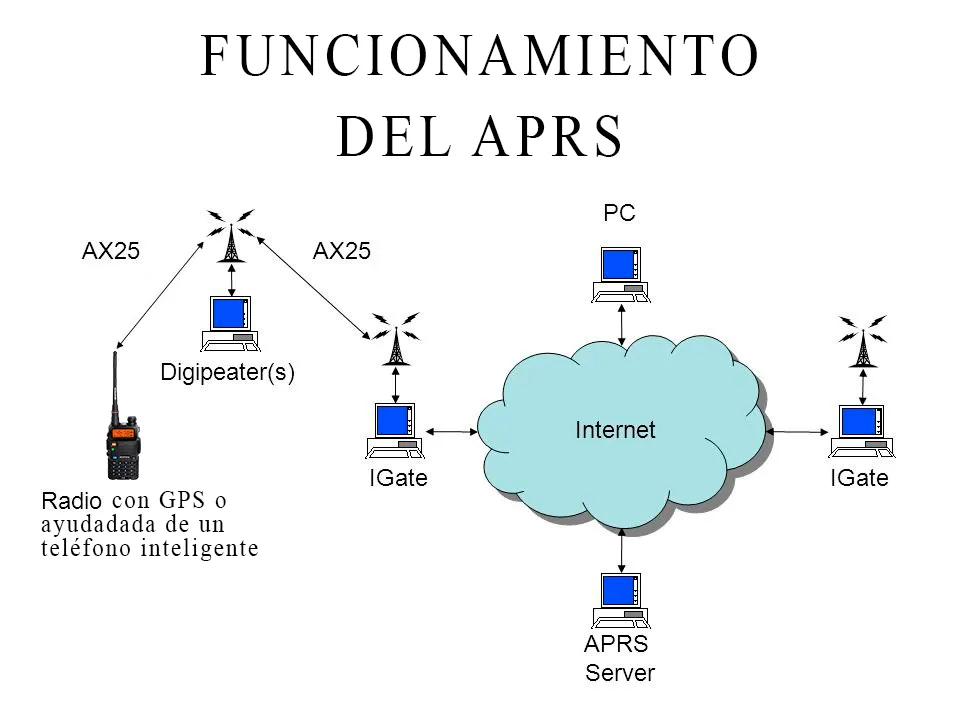
APRS operates by transmitting structured data packets containing geospatial information, messages or telemetry. The system’s key components include:
- User stations (transceivers with GPS and TNCs or compatible software).
- Digipeaters (packet repeaters that extend the network’s coverage).
- I-Gates (gateways that connect APRS to the internet).
- APRS servers (cloud infrastructure that allows real-time viewing and storage of data).
APRS transmissions usually operate on 144.800 MHz in Europe or 144.390 MHz in North America; the frequency depends on the region. The protocol uses the AX.25 structure to ensure data integrity.
APRS Applications
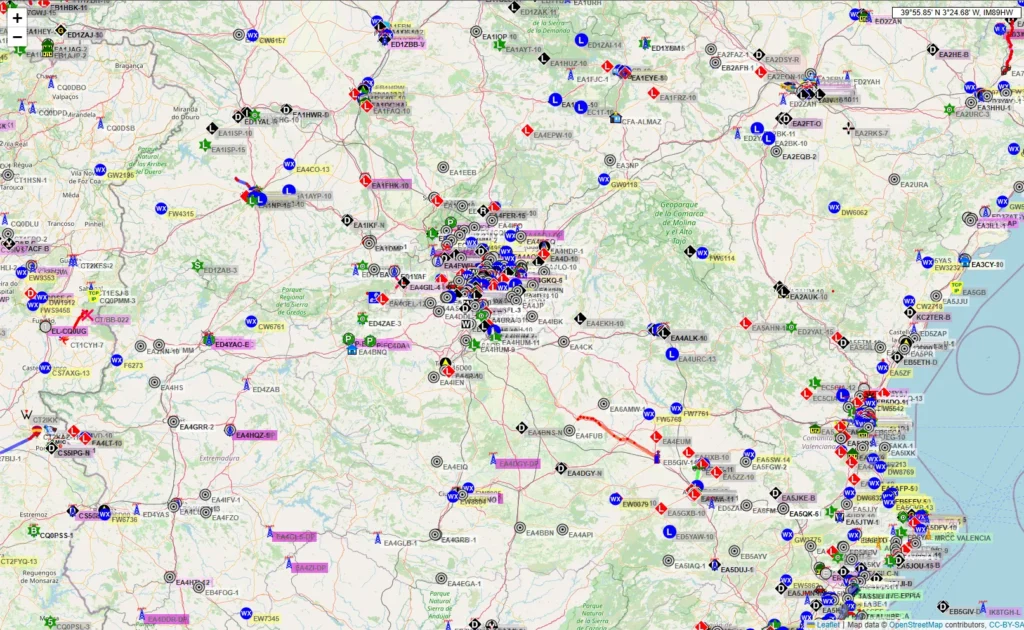
1. Tracking Vehicles and People
APRS is widely used to track the location of mobile stations, whether cars, boats or even weather balloons.
2. Digital Messaging
It allows text messages to be sent between radio stations with no need for cellular infrastructure or the internet.
3. Use in Emergencies
Radio amateurs use APRS to report natural disasters, accidents or emergency events, providing real-time information to rescuers and emergency services.
4. Weather Monitoring
Many APRS stations include weather sensors that transmit live data on temperature, pressure and humidity.
5. Telemetry and Automation
It is used in IoT applications, allowing remote sensors to be monitored over radio.
Hardware and Software for APRS
Compatible Radios
Some of the most popular current radios on the market include native APRS support.
It is also possible to use analog transceivers, like any CB radio or PMR walkie-talkie, by using an external TNC or a smartphone app.
APRS Software and Apps
There are several apps and platforms for interacting with APRS:
- APRS.fi (real-time data visualization on maps).
- APRS Droid (Android app).
- Xastir (APRS software for Linux).
- Dire Wolf (software TNC for Windows and Linux).
APRS and LoRa – The System Evolves
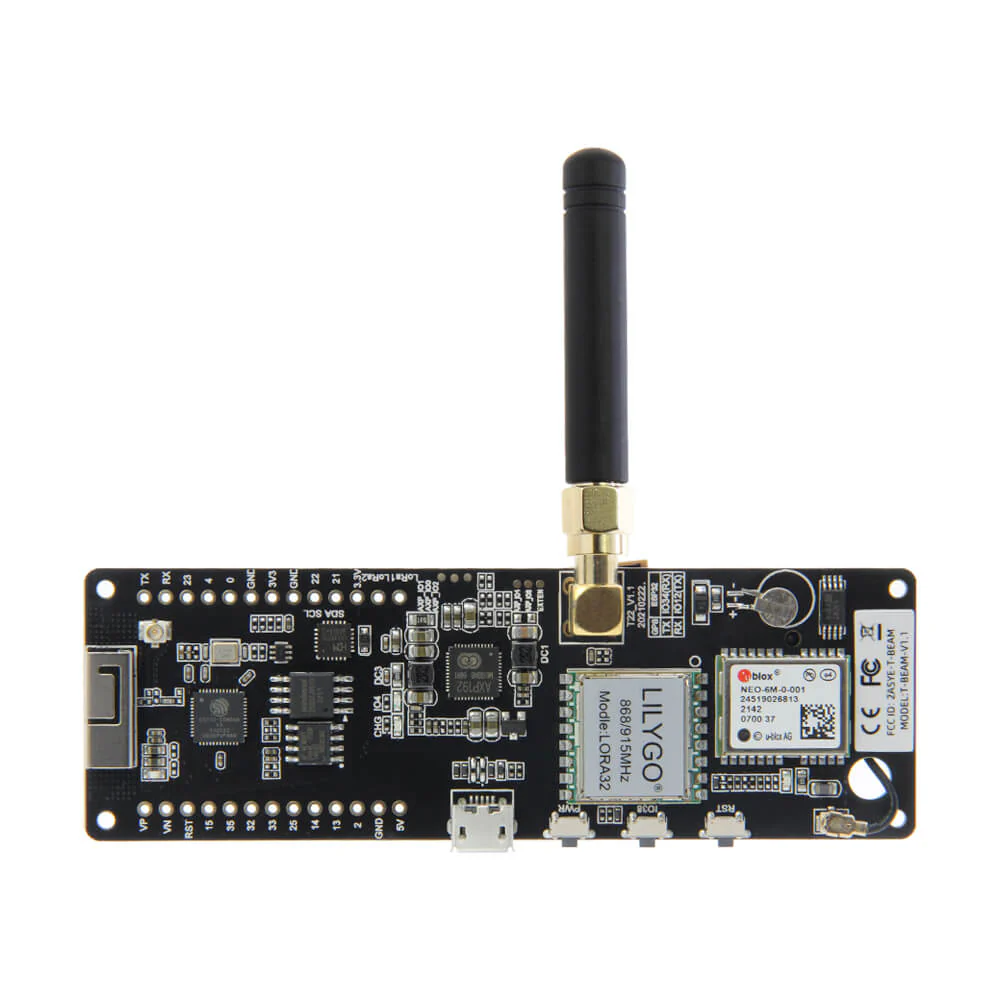
One of the most recent and revolutionary integrations in APRS is its combination with LoRa (Long Range Radio). This low-power radio protocol makes it possible to transmit APRS packets over long distances with minimal power consumption. These devices operate on license-free frequencies, so anyone can use them and benefit. It is no longer just for radio amateurs.
Some notable projects include:
- LoRa APRS on 433 MHz for low-cost communications.
- APRS-LoRa gateways that interconnect LoRa networks with traditional APRS.
This opens up new possibilities in asset tracking, exploration and emergency applications with no need for licenses or conventional telecom infrastructure, using very cheap hardware such as the Lilygo devices based on an ESP32 microcontroller.
Over the past year, the LoRa APRS network has grown spectacularly, mainly thanks to the efforts of the community, which is adopting this technology in a big way.
How to Get Started with APRS on a Budget
If you want to experiment with APRS without spending too much, there are several affordable options:
- Low-cost LoRa devices: using hardware like the Lilygo ESP32 LoRa modules is a simple, cheap way to get started with APRS without needing an amateur radio license. You can find the best tutorial on the internet for setting up your LoRa APRS system on the Riojanos Por la Radio site: LoRa APRS for Dummies.
- Using a CB radio or PMR walkie-talkie: if you already have a Citizens Band (CB) radio or a PMR walkie-talkie, you can pair it with APRS Droid to transmit and receive APRS packets easily.
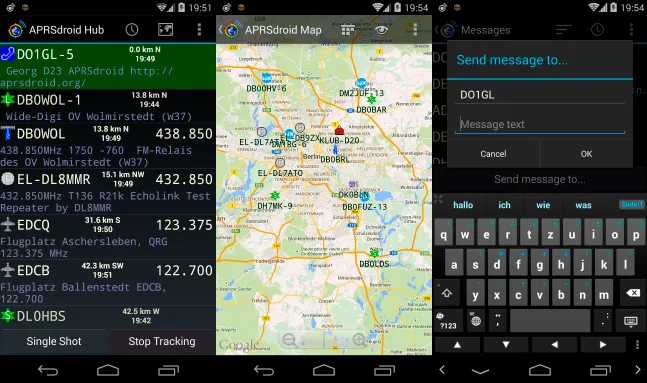
Exploring the world of APRS with these low-cost options is an excellent way to get started in digital amateur radio and real-time data monitoring.
Give APRS a Try!
APRS is a fascinating system that keeps evolving with new technologies and applications. Whether you are an experienced radio amateur or just starting out, there are many ways to join this global communication network. With accessible equipment and free software, anyone can start experimenting and discover the potential of APRS. Do not hesitate to give it a go and be part of this exciting community!
You can also try my aprStar messaging app.