Alphanet – The Surveillance Network Spreading Across Catalonia
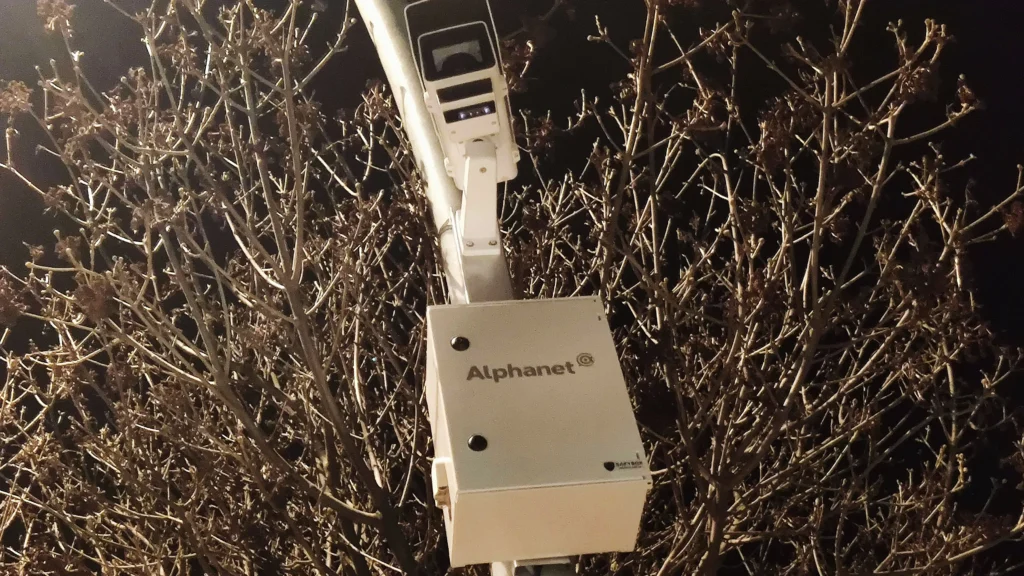
A few weeks ago, while having a coffee in a bar in the town where I live, La Seu d’Urgell, I couldn’t help overhearing a group of regulars talking about a new radar that had been installed on one of the town’s streets.
I was quite surprised, but curiosity got the better of me and I went to see it for myself.
There it was. The whole apparatus was zip-tied halfway up a streetlight. A junction box with a camera and several sensors mounted on top.
An inscription reading “Alphanet” on the lid of the junction box, with a cable running down almost to the base of the streetlight where it connected.
It was a temporary installation — it’s not there anymore.
Once home, curious about what it was, I looked up Alphanet, a Barcelona-based company I’d never heard of before, yet one that plays an important role in our everyday lives, especially if you live in Catalonia.
Who’s behind Alphanet?
This company is called Alphanet Security Systems S.L, and its founder and sole director is Francesc Minguillon Carreras, a computer engineer trained at the UPC with a master’s degree in leadership from IESE. Nothing particularly notable, were it not for the fact that his company has been awarded more than 220 public contracts with Catalan town councils totaling around €7.4 million. In many of those tenders, Alphanet was the only company that applied. No competition at all. Not a trace of any major tech companies. Curious, to say the least.
The technology of absolute control
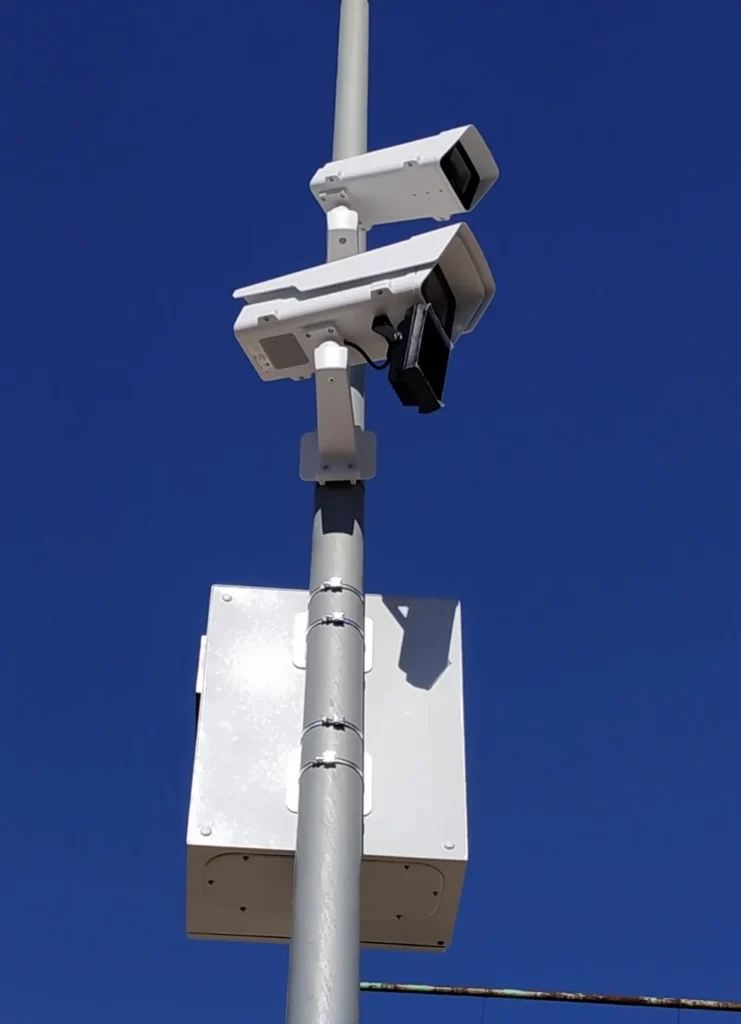
So what does Alphanet actually sell? It doesn’t just install cameras. Its business is control. It supplies town councils with video surveillance systems featuring license plate recognition, vehicle tracking, motion detection and smart video analysis. All of this is managed from a central platform called AlphaDataManager, from which security forces can monitor in real time any activity recorded by the devices. They also sell automatic alert systems and mass data storage for later review or cross-referencing with other databases.
The level of detail these systems collect is far from trivial: license plates, timestamps, routes, behavior patterns. Sensitive information about citizens, most of whom aren’t even aware they’re being monitored every time they cross a street covered by one of these cameras.
What would happen if that information fell into the wrong hands?
The question is: what happens the day this infrastructure suffers a security breach? Because we’re not talking about a handful of cameras in the town square. We’re talking about thousands of records containing license plates, locations, timestamps and residents’ movement patterns. If an attacker were to access that system, they wouldn’t just be able to manipulate data or trigger false alarms — they could literally track any resident. Know when you leave home, where you go, when you come back. That information in the hands of a criminal is a ticking bomb.
And if you think this is science fiction, remember that in recent years even state agencies have fallen victim to cyberattacks. No one is safe. And every new camera installed without public oversight or democratic transparency is an added risk.
Is this price worth paying for a false sense of security?
The “we’re doing this for your safety” line doesn’t hold up anymore when petty crime keeps rising in major cities despite the massive rollout of technology. We’ve sacrificed privacy, freedom of movement and anonymity, and we’re no safer or more at ease for it. Technology is no substitute for either social prevention or an effective police presence.
Meanwhile, companies like Alphanet keep growing in the shadows through opaque public contracts, with no real competition in the tenders, deploying surveillance systems most citizens don’t even know exist.
What if La Seu d’Urgell were the next target?
Could that camera we saw have been a pilot test? Will La Seu d’Urgell be the next name to show up on Alphanet’s ever-growing client list?
Because once surveillance becomes normalized and opacity becomes institutionalized, the problem is no longer the technology. The problem is us, for not questioning it.
You might want to check out these related topics:
Speed Cameras in Spain – From Road Safety to Revenue and Mass Surveillance
Exporting Surveillance Technology. The Expanding Chinese Model
How SIRDEE works, the Spanish state’s digital network