The HAARP Project
The HAARP Project
Atmospheric Manipulation Technology?
In recent years, HAARP (the High-Frequency Active Auroral Research Program) has drawn a great deal of public curiosity, attracting researchers and conspiracy-theory fans alike. This project, located in Gakona, Alaska, uses powerful radio-frequency emissions to study the ionosphere, a layer of the atmosphere that plays a crucial role in communications and in the interaction between space weather and terrestrial weather. In this article we will look at how the technology works and what capacity it might have to affect the weather or trigger other phenomena such as earthquakes, always from a neutral, fact-based standpoint.
What is HAARP and how does it work?
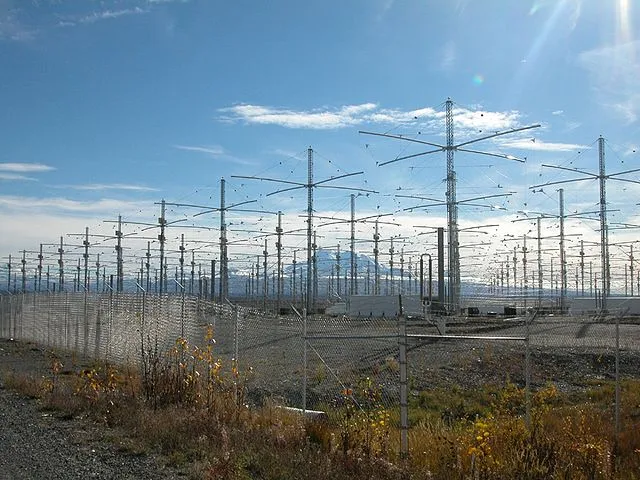
HAARP works by emitting powerful high-frequency radio waves that selectively heat parts of the ionosphere, a region of the atmosphere between 60 and 1,000 km up, rich in charged particles. Through an array of antennas arranged in a “phased array” configuration, the energy can be steered electronically toward specific areas of the ionosphere without physically moving the antennas. This approach makes it possible to study how the ionosphere responds to different kinds of energy, producing phenomena such as plasma waves and electromagnetic emissions.
During the experiments, the radio-frequency signals interact with the electrons in the ionosphere and can induce particular responses, such as the formation of very low frequency (VLF) waves or the amplification of waves already present in the environment. One of HAARP’s most notable capabilities is its ability to generate “two-hop echoes”, in which signals transmitted from Alaska bounce off the magnetosphere and return to Earth. These echoes are crucial for understanding how waves propagate through the ionosphere and the magnetosphere.
HAARP can also induce a variety of secondary emissions known as stimulated electromagnetic emissions (SEE), which helps researchers measure how the ionosphere reacts to different stimuli. HAARP also studies the behavior of the magnetic field lines that connect different parts of the planet; by analyzing how radio waves interact with these lines, scientists can investigate the movement of charged particles along Earth’s magnetic field, a key aspect of understanding phenomena such as the auroras and the influence of the solar wind.
One method used involves radio-frequency beams in conventional configurations and in less common ones, such as “twisted beams”. These create ring-shaped heating patterns and can produce “airglow”, or artificial glowing layers of air. These observations make it possible to measure how different configurations affect wave propagation, contributing to our understanding of how the atmosphere behaves under natural and artificial conditions. With these experiments, HAARP acts as a “natural laboratory” for studying wave and particle interactions in the atmosphere on a large scale.
Impact on the Climate and the Possibility of Creating Earthquakes

One of the main issues surrounding HAARP is concern about its potential to alter the weather or trigger extreme geophysical events such as earthquakes. In the studies carried out, HAARP has proven able to induce power line harmonic radiation (PLHR) and to create magnetospheric line radiation (MLR), both of which propagate through the ionosphere and the magnetosphere. In simple terms, this means HAARP can generate and study electromagnetic waves that affect the behavior of charged particles in the atmosphere.
These capabilities, impressive as they are scientifically, have fueled fears that the technology could be used to modify the weather or even deliberately create earthquakes. To date, however, there is no concrete evidence to support such claims. The fact that HAARP can generate waves that interact with the atmosphere does not necessarily mean it has the power to alter the climate on a large scale or to induce earthquakes, since the energies involved are minuscule compared with natural processes.
For example, HAARP has been observed to produce “echoes” that travel back and forth between the northern and southern hemispheres, which helps scientists understand how these waves propagate through the atmosphere. But as for the ability to modify complex weather patterns such as hurricanes or storms, current studies suggest that the scale of the experiments carried out is far below what would be needed to produce such effects.
Other Similar Facilities Around the World
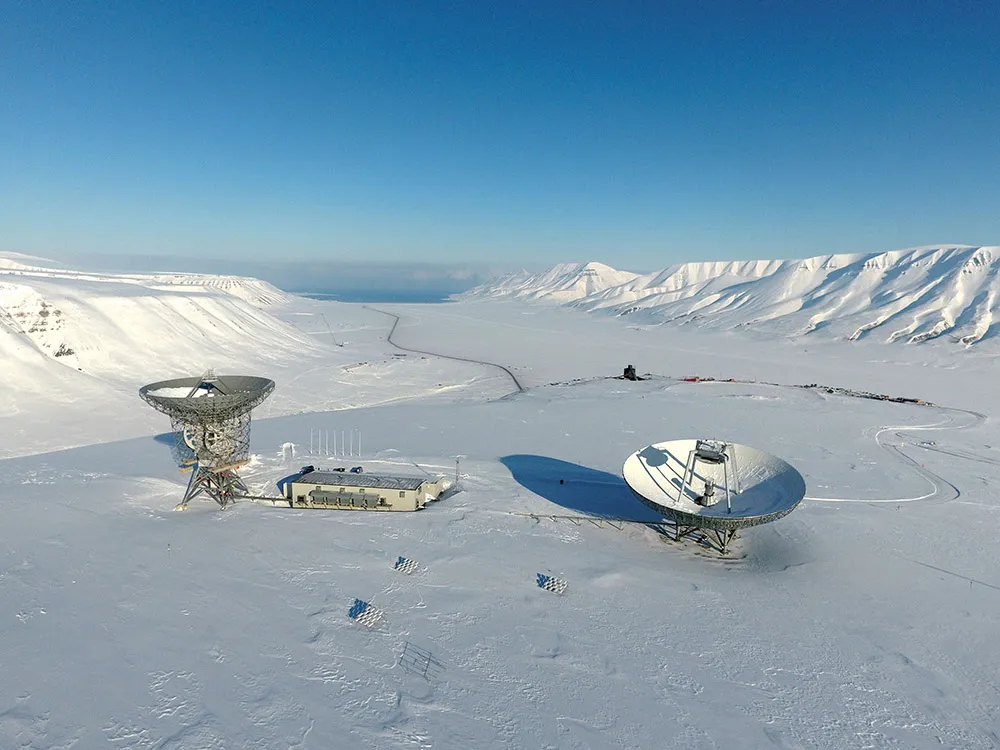
HAARP is not the only facility of its kind in the world. There are several similar projects dedicated to studying and manipulating the ionosphere. For example, the EISCAT system (European Incoherent Scatter Scientific Association), located in Norway, Sweden and Finland, also uses powerful radio emissions to study the upper atmosphere. Another important facility is SURA, an ionospheric research center in Russia that has been running similar experiments since the 1980s. In China, the ZHIP (Zhangheng-1 Ionospheric Probe) ionosphere-modification experiment also has comparable capabilities. These facilities let scientists carry out research that, while sometimes controversial, is fundamental to better understanding how the atmosphere behaves and how it interacts with space.
The existence of multiple facilities in different countries highlights the global scientific interest in studying the ionosphere and understanding the complex mechanisms that affect it. While this could fuel suspicions about the possible military use of these technologies, it also shows that the knowledge gained has important applications in improving communications and forecasting the impact of space events on Earth.
The Line Between Science and Speculation

The very nature of the HAARP project has led many to speculate about possible undeclared uses, including weather manipulation for military purposes. It is a fact that the atmosphere can be influenced, to some extent, by artificial means. Observations with HAARP, such as the “twisted beam” experiments and the creation of artificial ionization layers, show that the ionosphere is sensitive to high frequencies, and notable — though localized — effects have been achieved.
It is important to remember, however, that the effects measured by HAARP are localized and temporary, and that the studies focus on specific phenomena. The ionosphere, by its nature, is a layer that varies constantly due to the influence of the Sun, geomagnetic storms and other space factors. The energy needed to produce a significant, lasting change in the global climate would be far greater than anything HAARP can generate.
On the other hand, the experiments have documented phenomena such as stimulated electromagnetic emission (SEE), which lets researchers observe how waves behave within the ionospheric plasma. These studies not only have implications for telecommunications, they also help us understand how targeted control of certain atmospheric properties might be possible in the future.
Science, Mystery and Reflection
HAARP is a powerful tool that lets scientists study the ionosphere in an unprecedented way. Its ability to temporarily modify this region of the atmosphere has raised reasonable questions about the potential impact on the climate and on global security. Although some theories suggest it could be used to create natural disasters, the evidence so far indicates that the experiments carried out do not have the scale needed to produce such effects.